






USPAP-compliant appraisals by best-in-class appraisers
.avif)
Joe Kattan

Jason Dolph, CAGA

Tim Roy, ASA, CEA

Marnie Erkelens, CAGA

Aron Blue
About AppraiseItNow's Hospital Equipment Appraisal Services
AppraiseItNow provides certified hospital equipment appraisals for healthcare organizations, lenders, legal counsel, and tax professionals navigating complex valuation needs. Our appraisals support asset-based lending, IRS estate and gift tax filings, charitable donation reporting under IRS Form 8283, insurance coverage and claims, financial reporting, mergers and acquisitions involving healthcare facilities, and bankruptcy proceedings. Hospital equipment represents a specialized and technically demanding subset of our broader equipment and machinery appraisal services, requiring appraisers with direct knowledge of clinical asset lifecycles, regulatory compliance factors, and healthcare market dynamics. Our mission is to deliver defensible, USPAP-compliant valuations with exceptional speed, professionalism, and client service.
Our appraisers serve hospital systems, outpatient surgery centers, diagnostic imaging facilities, physician groups, healthcare private equity firms, estate administrators, and attorneys handling healthcare-related litigation or transactions. Because hospital equipment is often large, fixed in place, or requires operational context to assess accurately, many engagements involve onsite inspection, though remote appraisals are completed where asset documentation, service records, and condition reports are sufficient. We offer Fair Market Value (FMV), Orderly Liquidation Value (OLV), Forced Liquidation Value (FLV), and Replacement Value appraisals for various intended uses.
What Types of Hospital Equipment Do We Appraise?
Hospital equipment spans a wide range of clinical, diagnostic, surgical, and support categories. Our appraisers evaluate:
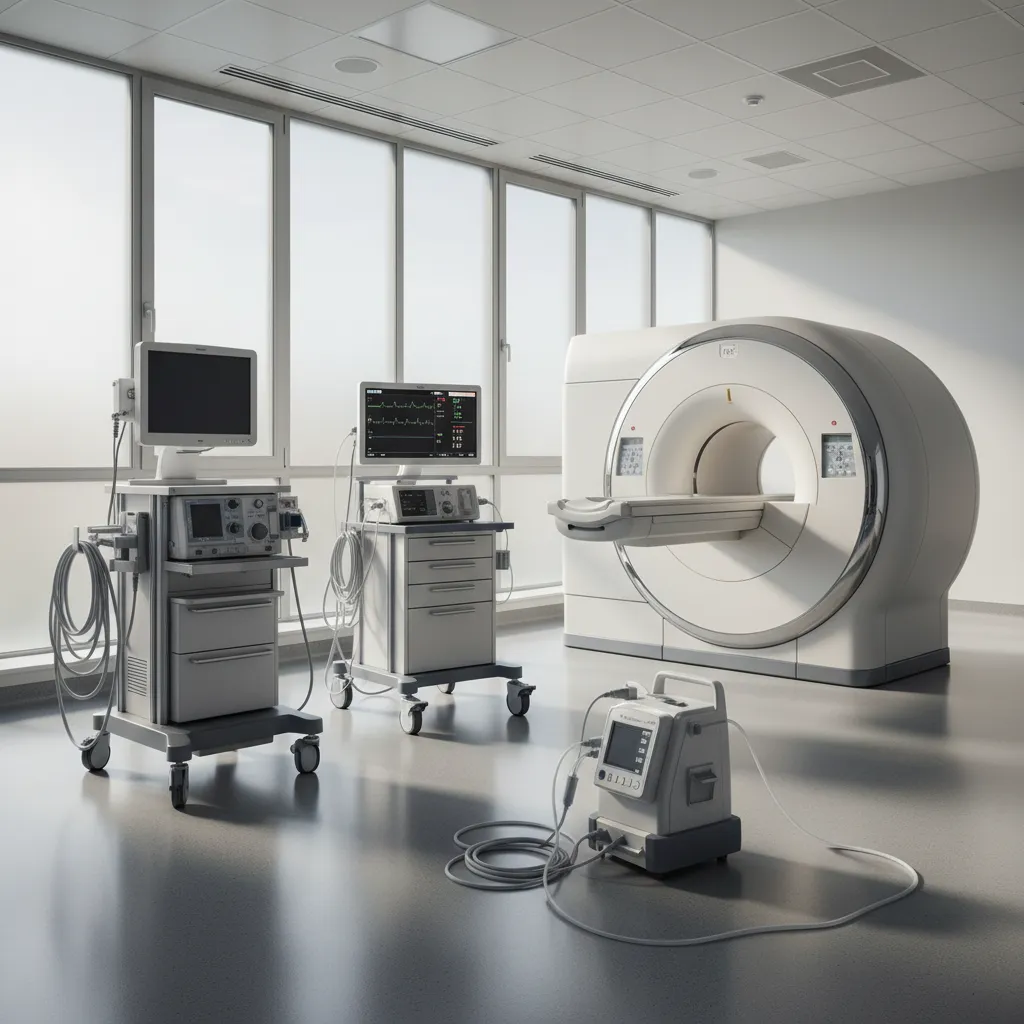
- Diagnostic imaging systems, including MRI machines, CT scanners, PET scanners, and X-ray equipment
- Surgical and interventional equipment, including operating tables, surgical lights, laparoscopic towers, and robotic surgery systems
- Patient monitoring systems, including bedside monitors, telemetry units, and central nursing station equipment
- Anesthesia delivery systems and ventilators
- Laboratory analyzers and pathology equipment, including hematology analyzers, centrifuges, and PCR systems
- Sterilization and infection control equipment, including autoclaves and washer-disinfectors
- Infusion pumps, IV poles, and medication dispensing systems
- Radiology and fluoroscopy equipment
- Endoscopy and bronchoscopy systems
- Biomedical support equipment, including defibrillators, ultrasound units, and patient lifts
Who Does AppraiseItNow Serve?
AppraiseItNow serves hospital administrators, healthcare CFOs, private equity firms acquiring or divesting clinical assets, bankruptcy trustees, estate attorneys, CPAs, and insurance professionals who require credible, independent valuations of medical facility assets. We also assist individual physicians, outpatient clinic owners, and donors contributing surplus hospital equipment to qualifying nonprofit organizations.
5-Star Valuation Services, Loved by Hundreds
{{sectionName}}

{{sectionName}}
{{sectionName}}
{{sectionName}}
Machinery & Equipment valuations for commercial and personal clients
Servicing Commercial & Industrial Businesses
AppraiseItNow serves major businesses and commercial clients, including:
- Banks and lenders
- Construction companies
- Infrastructure contractors
- Inudstrial & manufacturing companies
- Internal finance teams
- CPAs
- Attorneys

Servicing Individuals & Households
AppraiseItNow also serves individual consumers with projects large and small. These clients often include:
- Machinery & Equipment owners or estate inheritors
- Individuals making non-cash charitable donations
- Couples going through marital divorce
- Families dealing with estate planning or post-death estate matters
- Individuals dealing with insurance or other third-party claims
- Individuals going through major financial or other life events
.svg)
View all Locations
How our Valuation Process Works
Written USPAP-compliant equipment appraisals for when defensibility matters.
Given the USPAP-compliant nature of AppraiseItNow’s appraisal reports, we prepare our deliverables for major legal, tax, and financial reporting purposes for individual and commercial clients.
Popular uses of our appraisal reports include:
Tax, Estate & Financial Planning
- Gift Tax - IRS Form 709
- Estate Tax - IRS Form 706
- Charitable Donations - filing of IRS Form 8283
- Estate planning, equitable distribution, and probate
Transactions, Lending & Investment
- Asset-backed Lending
- Purchase price allocation & cost segregation
- Mergers & Acquisitions (transactional due diligence)
- Investment analysis & planning
- Financial Reporting
Insurance & Risk Management
Life Events & Special Circumstances
- Divorce
- Social Security reporting or Medicaid Application Filings
- E-2 visa applications
What types of hospital equipment does AppraiseItNow appraise?
AppraiseItNow appraises a wide range of hospital and medical equipment, from large capital assets to smaller clinical devices. Common categories include:
- Diagnostic imaging equipment such as MRI machines, CT scanners, and X-ray systems
- Surgical and operating room equipment including tables, lights, and anesthesia machines
- Patient monitoring systems and ventilators
- Endoscopy and minimally invasive procedure equipment
- Laboratory analyzers and pathology instruments
- Infusion pumps, sterilization equipment, and patient beds
- Radiology and radiation therapy systems
- IT hardware and health information technology infrastructure
If you have a specific piece of equipment or a mixed inventory, contact us and we can confirm coverage before you get started.
Are your hospital equipment appraisals USPAP-compliant?
Yes. All AppraiseItNow hospital equipment appraisals are developed and reported in compliance with USPAP Standards 7 and 8, which govern personal property appraisals including medical and diagnostic equipment. Standard 7 requires proper problem identification, competency assessment, and scope of work determination, while Standard 8 requires that reports be complete, non-misleading, and fully disclose the scope of work. Our appraisers meet the credentialing and continuing education requirements set by The Appraisal Foundation, making our reports qualified for IRS submissions, insurance agencies, lenders, and courts.
What are common reasons someone needs a hospital equipment appraisal?
There are many situations that require a formal, defensible valuation of hospital equipment. Common reasons include:
- Charitable donations of equipment to nonprofits or healthcare organizations, where IRS rules require a qualified appraisal for deductions over $5,000
- Estate planning, probate, and inheritance involving medical assets
- Insurance coverage, damage claims, or total loss settlements
- Mergers, acquisitions, and due diligence for healthcare facility transactions
- Asset-based lending and financing using equipment as collateral
- Bankruptcy filings and litigation support
- Property tax assessments and purchase price allocations
- Internal financial reporting under FASB GAAP standards
Can you appraise hospital equipment in poor condition, with unknown provenance, or with limited documentation?
Yes. Appraisers regularly work with equipment that has incomplete service records, missing manuals, or uncertain ownership history. Physical condition, including wear, cosmetic damage, and operational status, is one of the primary factors evaluated during an appraisal, and our appraisers are trained to assess value even when documentation is limited. Providing whatever records you do have, such as purchase invoices, maintenance logs, or asset tags, will help improve accuracy, but a lack of complete documentation does not prevent us from completing a credible report.
Can you appraise large collections or multiple pieces of hospital equipment?
Yes. AppraiseItNow regularly handles small fleets, mixed equipment sets, and large hospital inventories with dozens or hundreds of line items. For larger collections, we can coordinate an in-person appraiser to conduct a thorough on-site inspection, verify asset tags and serial numbers, and document physical condition across the full inventory. Volume pricing is available for multi-item projects, and we can discuss the best approach for your specific situation before work begins.
Do you provide online or remote hospital equipment appraisals?
Most hospital equipment appraisals are completed remotely using photographs, manufacturer specifications, serial numbers, service records, and comparable market data. For larger projects, complex integrated systems such as MRI suites, or inventories requiring physical verification, we can coordinate an in-person appraiser anywhere in the United States. Remote appraisals are faster and cost-effective for standalone or well-documented assets, while onsite inspections are recommended when scope, asset complexity, or lender requirements call for direct physical inspection.
How much does a hospital equipment appraisal cost?
Appraisal fees depend on the number of items, the complexity of the equipment, and the intended use of the report. Standard appraisals, used for insurance coverage, internal planning, estate distribution, and probate, start at $295. Advanced appraisals for IRS filings, charitable contributions on Form 8283, M&A due diligence, asset-based lending, litigation support, bankruptcy, and transactional purposes start at $395. Volume pricing by number of items is as follows:
- 1 item: $295 to $595 for a single machine appraisal
- 10 items: $995 to $3,000 for a small fleet or mixed equipment set
- 50 or more items: $5,000 to $10,000 or more for larger inventories, frequently completed in person
All fees are quoted as a fixed price before work begins so there are no surprises.
Do you offer discounted pricing for large volumes?
Yes. Pricing scales favorably as the number of items increases, and larger hospital inventories are quoted at a lower per-unit rate than single-item appraisals. A project covering 50 or more pieces of equipment is typically quoted in the $5,000 to $10,000 or more range depending on complexity, asset types, and whether an onsite inspection is required. Contact us with a summary of your inventory and we will provide a fixed-price quote before any work begins.
How long does a hospital equipment appraisal take?
Most remote hospital equipment appraisals are completed within 7 to 10 business days from the time we receive the necessary information and documentation. Onsite inspections or larger multi-item inventories typically take 2 to 3 weeks to complete. If you have a time-sensitive need, rush service is available for same-day or next-day turnaround upon request.
Who prepares the appraisal report?
Appraisal reports are prepared by credentialed machinery and equipment appraisers with specific experience in medical and hospital equipment markets. AppraiseItNow's team includes appraisers holding designations such as ASA (Accredited Senior Appraiser through the American Society of Appraisers) and CEA (Certified Equipment Appraiser), and all reports are developed in compliance with USPAP's Competency Rule, which requires appraisers to have relevant experience with the specific equipment type and market before accepting an assignment.
Do you prepare appraisals for IRS Form 8283 (Noncash Charitable Contributions)?
Yes. When a hospital or healthcare organization donates equipment to a qualifying nonprofit and the claimed deduction exceeds $5,000, the IRS requires a qualified appraisal completed by a qualified appraiser, with the appraiser signing Section B of Form 8283. AppraiseItNow prepares USPAP-compliant appraisals that meet these requirements, and our appraisers are familiar with the disclosure rules that apply, including compensation and relationship disclosures that, if omitted, can invalidate the appraisal and trigger an audit. Our advanced appraisal tier covers charitable contribution filings starting at $395.
Do you buy, sell, or broker hospital equipment?
No. AppraiseItNow is an independent appraisal firm and does not buy, sell, or broker hospital equipment. This independence is essential to producing unbiased, defensible valuations that are accepted by the IRS, insurers, lenders, and courts. If you need assistance finding buyers or liquidation services after your appraisal is complete, we can point you toward appropriate resources.
What information do you need to get started?
To begin a hospital equipment appraisal, it helps to gather as much of the following as possible:
- Manufacturer name, model number, and serial number for each piece of equipment
- Year of manufacture and date of acquisition
- Current physical condition and operational status
- Photographs of the equipment, including any visible wear or damage
- Maintenance and service records or logs
- Original purchase price or invoices if available
- Asset tags or inventory lists for multi-item projects
- The intended use of the appraisal, such as insurance, IRS filing, or financing
- Any existing appraisals, lease agreements, or financing documents
You do not need all of these to get started. Contact us and we will guide you through what is needed for your specific situation.
Can AppraiseItNow appraise hospital equipment located anywhere in the U.S.?
Yes. Remote appraisals are available nationwide and cover the vast majority of hospital equipment assignments. For larger inventories, complex integrated systems, or projects where lenders or legal proceedings require physical inspection, we can coordinate an in-person appraiser in any state. Whether your equipment is in a single facility or spread across multiple locations, we have the coverage and logistics to handle it.
Will my appraisal be accepted by the IRS, insurers, or courts?
AppraiseItNow appraisals are USPAP-compliant, prepared by credentialed appraisers, and structured to meet the acceptance standards of the IRS, insurance carriers, SBA lenders, FASB financial reporting requirements, and courts. For IRS purposes, our reports qualify as "qualified appraisals" under Treasury Regulation 1.170A-17, which is required for charitable deductions over $5,000 and estate tax filings. For litigation and insurance matters, our reports include the scope of work disclosures, methodology explanations, and certifications that attorneys, adjusters, and judges expect to see.
How do appraisers determine whether to use fair market value or orderly liquidation value for hospital equipment?
The choice of value type depends entirely on the intended use of the appraisal. Fair market value reflects the price a willing buyer and seller would agree on in an open market with no pressure to transact, and it is the standard required for IRS filings, estate tax, and charitable donations. Orderly liquidation value assumes a reasonable but time-limited sale period, typically 90 to 120 days, and generally yields 40 to 60 percent of fair market value for hospital equipment. Forced liquidation value assumes an immediate or auction-driven sale and can be significantly lower still. Using the wrong value type, for example submitting an orderly liquidation value on an insurance claim that requires fair market value, can result in claim denial or IRS rejection, so it is important to identify the correct standard before the appraisal begins.
How does technological obsolescence affect the value of hospital equipment?
Technological obsolescence is one of the most significant depreciation factors in hospital equipment appraisals, particularly for imaging and diagnostic systems. Equipment that has been superseded by newer generations, or that no longer receives manufacturer software support or FDA-cleared updates, can lose value rapidly even if it is in excellent physical condition. Post-pandemic market dynamics have amplified this effect in certain categories: ventilator values in secondary markets dropped 70 to 90 percent due to oversupply, while endoscopy and imaging equipment held value due to sustained clinical demand. Appraisers must use an effective date that reflects current market conditions and apply the appropriate depreciation methodology to capture both physical deterioration and functional or economic obsolescence accurately.
Does the installation status of hospital equipment, such as whether it is integrated into a facility, affect its appraised value?
Yes, and this is one of the more commonly misunderstood aspects of hospital equipment valuation. Equipment that is permanently integrated into hospital infrastructure, such as an MRI suite with shielding, cooling systems, and custom installation, can carry a value premium of 20 to 50 percent compared to the same equipment in portable or uninstalled form, because relocation costs are effectively embedded in the asset. However, under a forced liquidation scenario, that installation premium disappears entirely because buyers at auction acquire equipment on an "as-is, where-is" basis and must bear removal costs themselves. Appraisers who fail to account for installation status when selecting the appropriate level of value risk producing reports that are disputed by the IRS, lenders, or opposing counsel in litigation.
APPRAISEITNOW APPRAISERS ARE BEST-IN-CLASS & CREDENTIALED BY LEADING APPRAISAL ORGANIZATIONS LIKE THE ISA, ASA, & MORE.




