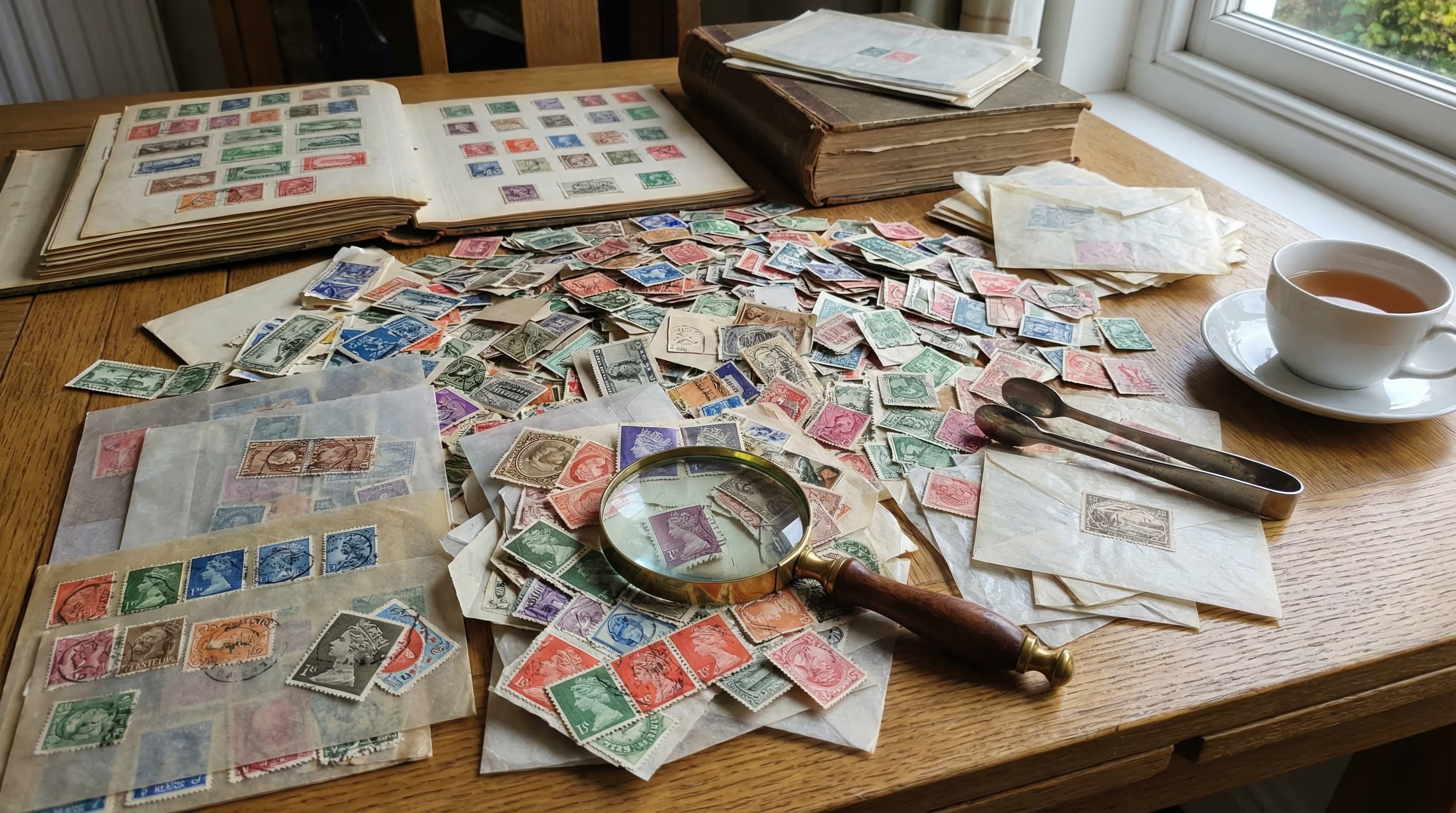
If you've inherited an old stamp album or discovered a box of stamps in the attic, your first question is probably simple: are any of these actually worth money? The short answer is that while most stamp collections have modest commercial value, some stamps can be worth hundreds or even thousands of dollars. The key is knowing what to look for and when to call in a professional.
By the end of this guide, you'll understand how to do a basic evaluation of your stamps, identify which ones might be valuable, and know when it's time to get a professional appraisal. Most importantly, you'll avoid the common mistakes that could cost you money when selling or insuring your collection.
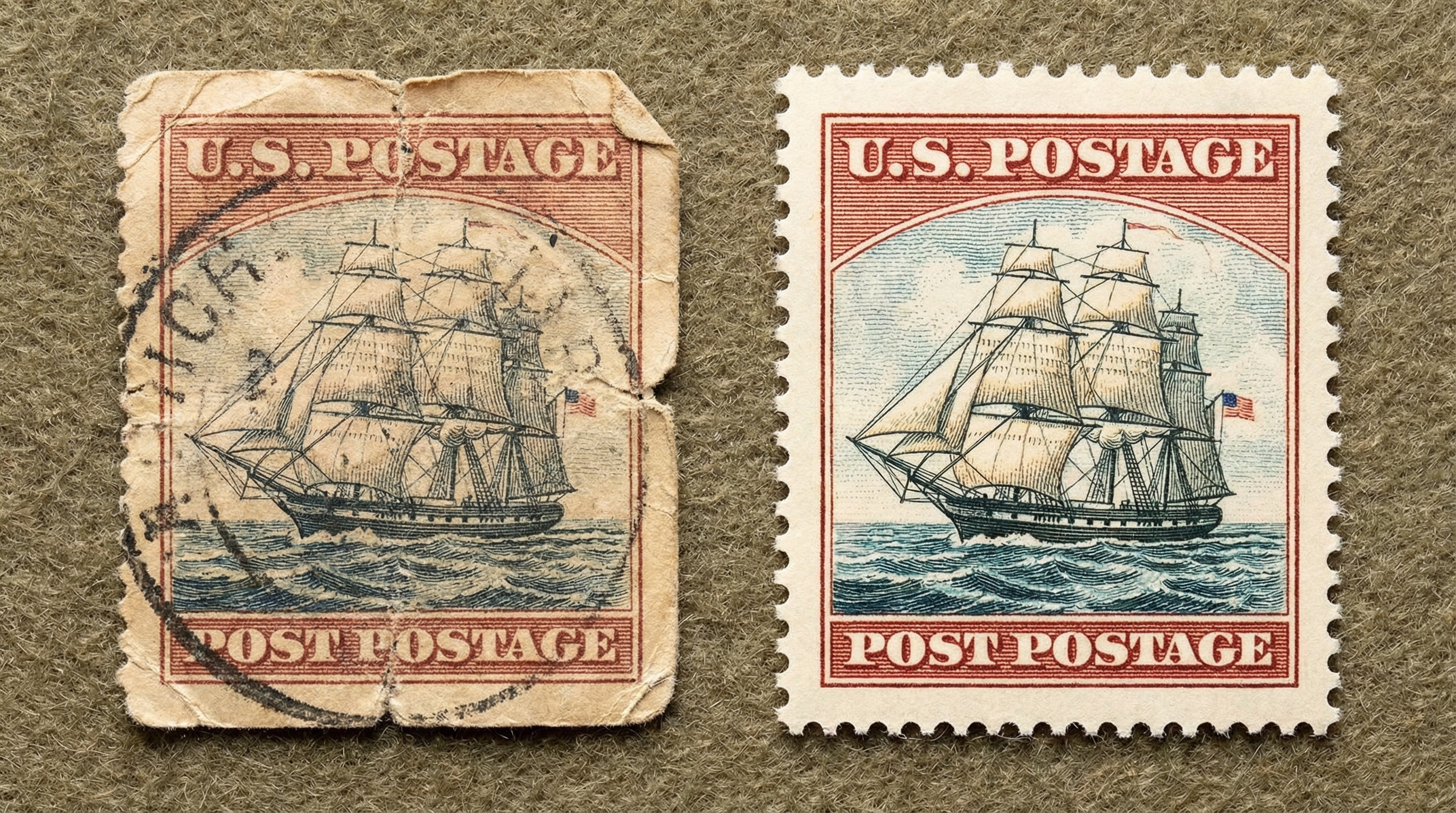
Quick fact: The condition of a stamp can make the difference between a $5 stamp and a $500 stamp. Even small tears, creases, or poor centering can dramatically reduce value.
Understanding what makes a stamp valuable
Not all old stamps are valuable, and not all valuable stamps are old. The value of any stamp depends on several key factors that work together to determine its market worth.
Condition is everything. A stamp's condition, or grade, has the biggest impact on its value. Collectors use terms like "mint" (unused with original gum), "fine" (average centering and condition), and "superb" (perfectly centered with no flaws). Even tiny imperfections like bent corners, thin spots, or heavy cancellation marks can cut a stamp's value by 50% or more.
Rarity matters more than age. A stamp from 1920 that was printed in millions of copies will likely be worth less than a 1990 stamp with a printing error. True rarity comes from low print runs, survival rates, or varieties like misprints, color shifts, or perforation errors. This principle applies across many collectibles, similar to evaluating rarity and significance in historic coins and medals.
Design and historical significance also play a role. Stamps featuring famous people, important events, or popular themes tend to hold their value better. Error stamps, where something went wrong during printing, are often the most valuable of all.
Quick checks to tell if your stamps might be valuable
Before diving deep into research, you can quickly separate potentially valuable stamps from common material with these simple checks.
Red flags for low value include modern commemorative stamps (especially those issued after 1960), heavily damaged stamps with tears or stains, and common definitive stamps that were printed for years. If you have sheets of mint stamps from the post office, these rarely appreciate beyond face value.
Positive signs worth investigating include stamps issued before 1940, unusual colors or designs, stamps with obvious printing errors, and anything from smaller countries or limited print runs. Pay special attention to stamps still on their original envelopes, as postal history can add significant value.
Use online resources as your first step. Websites like StampWorld or Colnect let you search by country and year to get a general idea of catalog values. Remember that catalog values are retail estimates, not what you'll actually receive when selling.
Step-by-step process to appraise your collection at home
Start by organizing your stamps systematically. Sort them by country first, then by time period or theme. This makes identification much easier and helps you spot patterns or complete sets.
Separate the wheat from the chaff by pulling out anything that looks unusual, old, or particularly well-preserved. Focus your research time on these potential gems rather than trying to value every single stamp. This approach mirrors the methods used when accurately determining the value of memorabilia and collectibles.
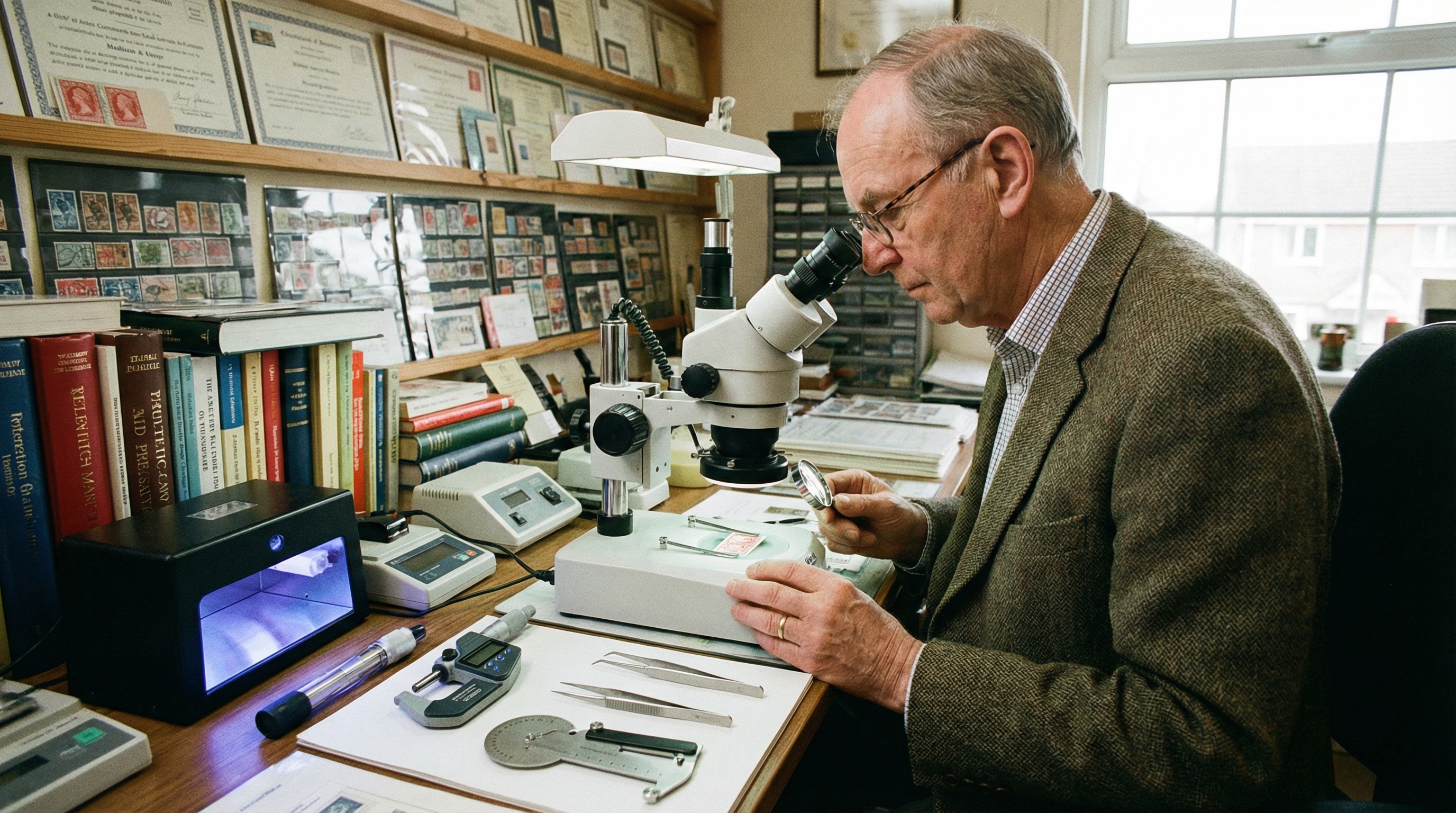
Assess condition carefully using good lighting and a magnifying glass. Look for centering (how well the design sits within the perforations), gum condition on the back of mint stamps, and any faults like creases, stains, or thin spots.
For identification, use stamp catalogs like Scott or Michel, which provide detailed descriptions and catalog values. Online databases can help with image matching, but be aware that similar-looking stamps can have very different values based on subtle varieties.
Remember: Catalog values represent retail prices in perfect condition. Real-world selling prices are typically 10-30% of catalog value, depending on condition and demand.
When you need a professional stamp appraisal
While you can get a rough idea of your collection's value through research, certain situations require a formal appraisal from a qualified professional.
Insurance purposes always require a certified appraisal. Insurance companies need documented proof of value to provide adequate coverage, and they typically require appraisals to be updated every 3-5 years as values change. Understanding the role of antiques appraisals in insurance claims can help you navigate this process.
Estate planning and divorce situations need legally defensible valuations. Courts and attorneys require appraisals from certified professionals who follow industry standards and can testify to their findings if needed.
Before major sales, especially for collections you believe might be worth more than a few thousand dollars, a professional appraisal can help you avoid selling valuable items for far less than they're worth.
Professional appraisers bring expertise you can't replicate at home. They can spot valuable varieties, assess condition accurately, and understand current market trends that affect pricing, much like specialized appraisers for collectibles do across various categories.
| Appraisal Method | Best For | Typical Cost | Pros | Cons |
|---|---|---|---|---|
| Self-research | Basic curiosity | Free | No cost, educational | Time-consuming, may miss valuable items |
| Dealer opinion | Quick assessment | Free-$50 | Fast, some expertise | May lowball for purchase |
| Online appraisal | Convenience | $100-300 | Convenient, documented | Limited by photo quality |
| Certified appraisal | Legal/insurance needs | $300-800 | Legally defensible, comprehensive | Most expensive, takes time |
How AppraiseItNow helps you get accurate stamp valuations
When you're ready for a professional appraisal, AppraiseItNow provides USPAP-compliant stamp appraisals that meet the highest industry standards. Our certified appraisers have extensive experience with philatelic materials and understand the nuances that affect stamp values.
We offer flexible appraisal options including online photo-based appraisals for convenience and in-person evaluations for high-value collections. Every appraisal includes detailed documentation suitable for insurance, estate planning, charitable donations, or legal proceedings.
Our reports provide item-by-item valuations, condition assessments, and market analysis that gives you confidence in your collection's true worth. Whether you're protecting your investment with insurance or planning for the future, we help ensure your stamps are properly valued and documented.
Getting started is simple. Contact our team to discuss your collection and determine the best appraisal approach for your specific needs. With proper documentation, you can protect your philatelic investment and make informed decisions about your collection's future.
Professional tip: Before your appraisal, organize your stamps by country and keep them in protective sleeves. Never attempt to clean stamps or remove them from albums without professional guidance, as this can damage valuable items. Learn more about properly storing and maintaining your memorabilia and collectibles.
Most stamp collections contain a mix of common material and potentially valuable pieces. While the majority might have modest worth, identifying and properly valuing the gems can make a significant difference in your collection's overall value. Whether you choose to research on your own or work with a professional appraiser, understanding what makes stamps valuable puts you in control of important decisions about your philatelic inheritance.