What is the difference between fair market value and liquidation value for California equipment?
Fair market value assumes a willing buyer and seller with reasonable exposure time, orderly liquidation value assumes a shortened but reasonable sale period, and forced liquidation value assumes a quick sale, often at auction. Lenders, workout specialists, and courts in California frequently request a specific premise, and the same machine can carry very different numbers under each one.
Is the book value on my depreciation schedule a reliable estimate of market value?
No. Accounting book value and tax depreciation are based on historical cost and standardized lives, not current market conditions, so they routinely diverge from what machinery would actually sell for. Condition, obsolescence, and secondary-market demand drive real value, which is why a market-based appraisal often surprises owners in both directions.
When does California require a Business Property Statement for machinery and equipment?
Owners of taxable personal property with an aggregate cost of $100,000 or more in a county must file a signed property statement with the assessor each year, due April 1 with a penalty after May 7. Assessors reappraise business equipment annually at market value, so accurate cost and asset records matter.
Why do older off-road diesel machines sell for less in California?
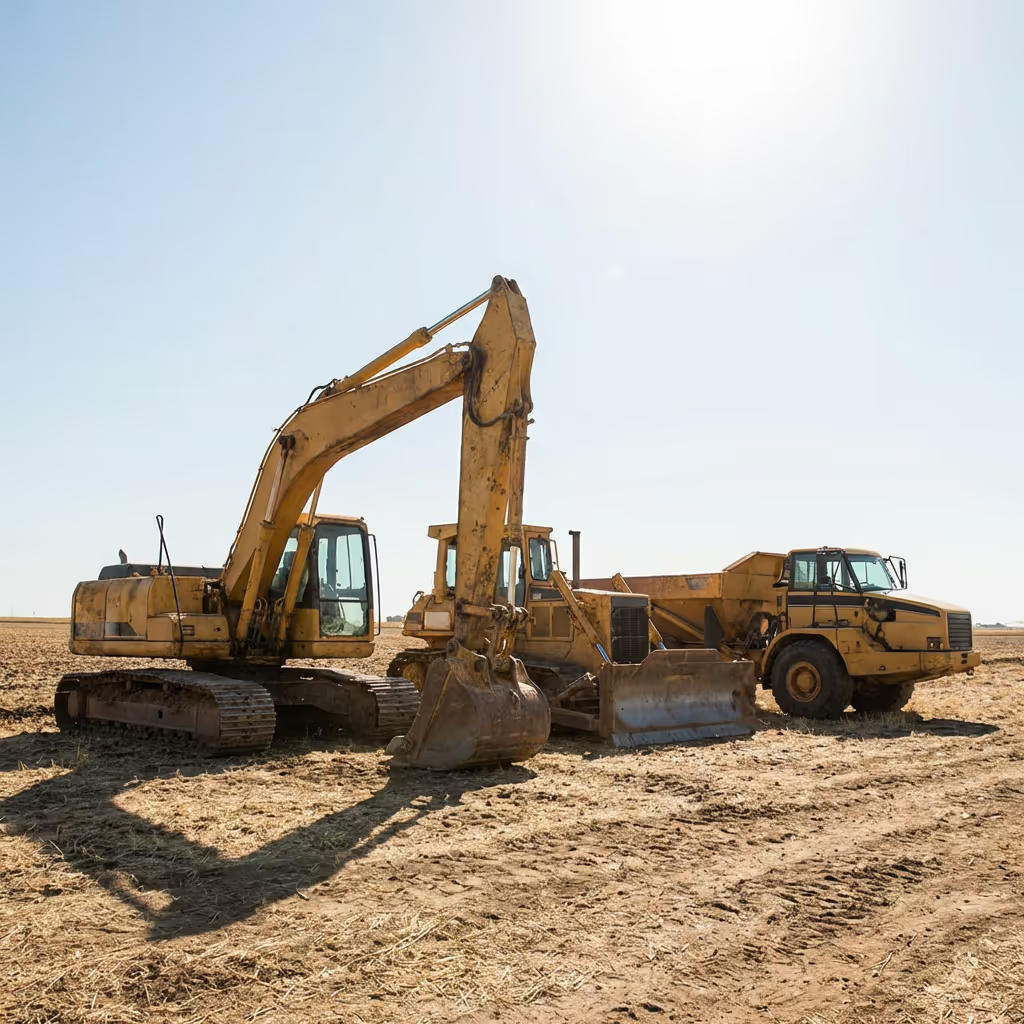
Because regulation limits who can add them to a fleet. The off-road diesel rule requires in-use fleets to report equipment in the DOORS system, where each engine receives an identification number that must be labeled on the machine, and it barred fleets from adding Tier 0 engines beginning in 2014, Tier 1 engines for large and medium fleets from 2014, and Tier 2 engines for those fleets from 2018. Shut-out machines often leave the state at a discount despite sound condition.
Where does the assessor’s number for my machinery come from?
From standardized tables, not your books. Revenue and Taxation Code 401.5 directs the Board of Equalization to publish uniform cost and valuation data, and Assessors’ Handbook 581 supplies age-based index and percent-good factors that counties apply to reported historical cost. Depreciation is therefore uniform statewide by category and age, which is exactly why the assessed figure and a market appraisal of the same machine often diverge.




.jpeg)