
Business Inventory Appraisal for Charitable Donation Tax Substantiation
Excess inventory appraisal for charitable donation substantiation, covering new sealed consumer goods, licensed merchandise, and overstock donated in bulk quantities. AppraiseItNow appraised a California donation of new licensed children's play products held as excess inventory, drawing comparables from completed wholesale liquidation and overstock auction sales rather than consumer retail listings.
Project Overview
Assignment Summary
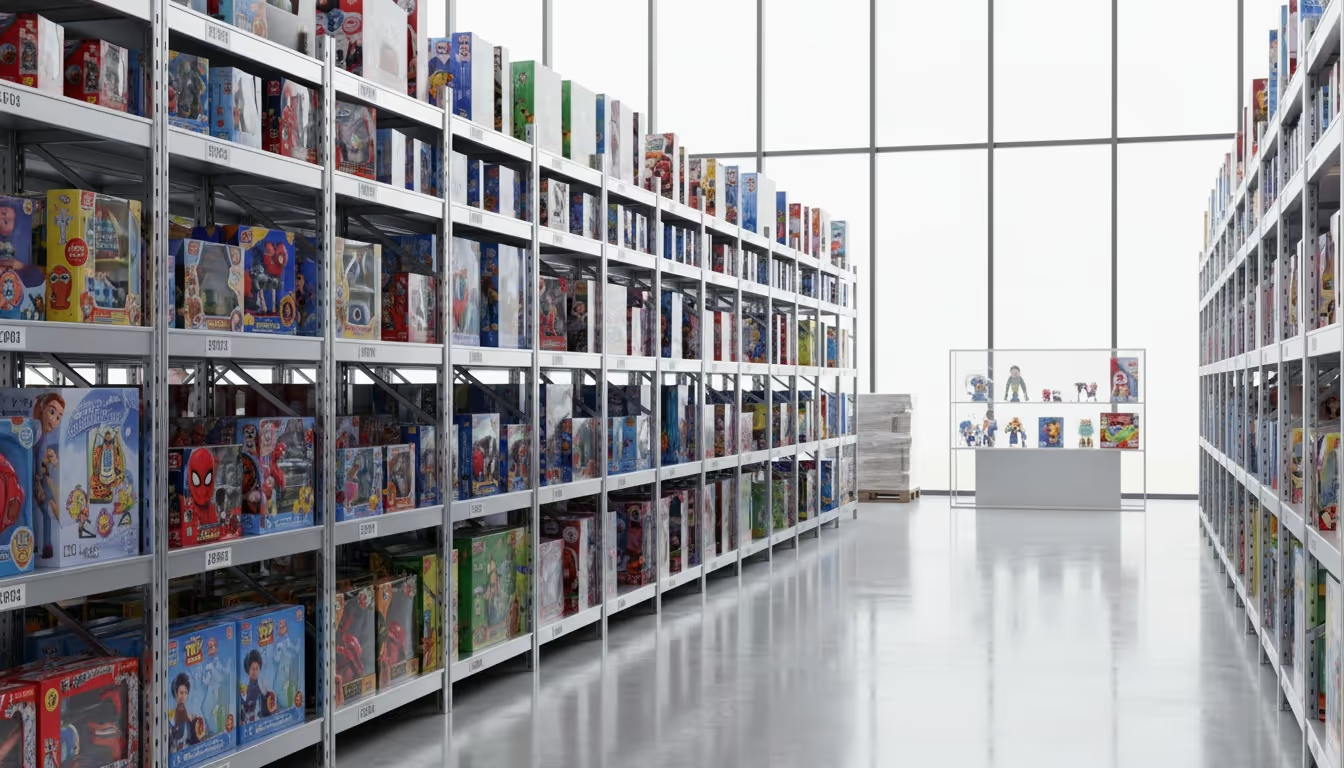
The assignment required a qualified appraisal of business inventory for a non-cash charitable contribution, completed in accordance with applicable IRS guidance and USPAP standards. The subject assets were new, unopened licensed children's play products in several character themes, held as excess inventory for donation. The scope included identification and description of the donated items, market research using secondary wholesale liquidation and online auction channels, unit-level comparable analysis, and preparation of documentation supporting the donation claim, including the appraiser's portion of IRS Form 8283. The intended user was the donor and the IRS for substantiation of the charitable deduction.
Challenges
Our Approach
Project Outcome
Ready to start your appraisal?
Tell us the asset and what the value is for, and we will confirm scope, timing, and a fixed fee before any work begins.
Request an AppraisalFrequently Asked Questions
Which market is correct for a bulk donation of new, unsold consumer products?
The correct market is the one where the donated quantity would realistically trade, which for palletized overstock is the secondary wholesale and liquidation channel. New and sealed does not mean retail: a buyer taking several thousand units at once is buying liquidation inventory and prices accordingly. Comparables come from completed liquidations and overstock auctions, not from the product's listed retail price.
Do licensed character goods carry a different value from generic equivalents?
They can move in either direction. A recognizable license can lift demand in the resale channel, while licensing restrictions on where and how goods may be resold can narrow the buyer pool and depress realized prices. We look at completed sales of the specific licensed line rather than assuming the license adds a premium, and the report explains which effect the evidence supported.
Why use completed sales instead of active listings?
Active listings show what a seller hopes to get; completed sales show what a buyer actually paid. In liquidation channels the gap between the two is wide and systematic, because unsold listings accumulate at optimistic prices. Where only active listings exist for a product line, they are used with a documented adjustment and the report says so.
What supporting records should a business keep for a bulk inventory donation?
Keep the records that let someone reconstruct the donation years later, specifically:
- The itemized inventory with SKUs, unit counts and package configurations
- Purchase invoices or production cost records establishing basis
- Photographs of the goods as they were transferred
- The donee's written acknowledgment and its signed Form 8283 section
- Shipping or receiving documents showing what physically moved