
Charitable Donation Appraisal for Floral Collection
Floral specimen appraisal for charitable donation substantiation, covering preserved botanical specimens, curated natural history collections, and material accessioned into a nonprofit's permanent holdings. AppraiseItNow appraised a Maryland donation of floral specimens for a nonprofit's permanent collection, applying the cost approach where comparable sales for donated botanical material were too thin to rely on.
Project Overview
Assignment Summary
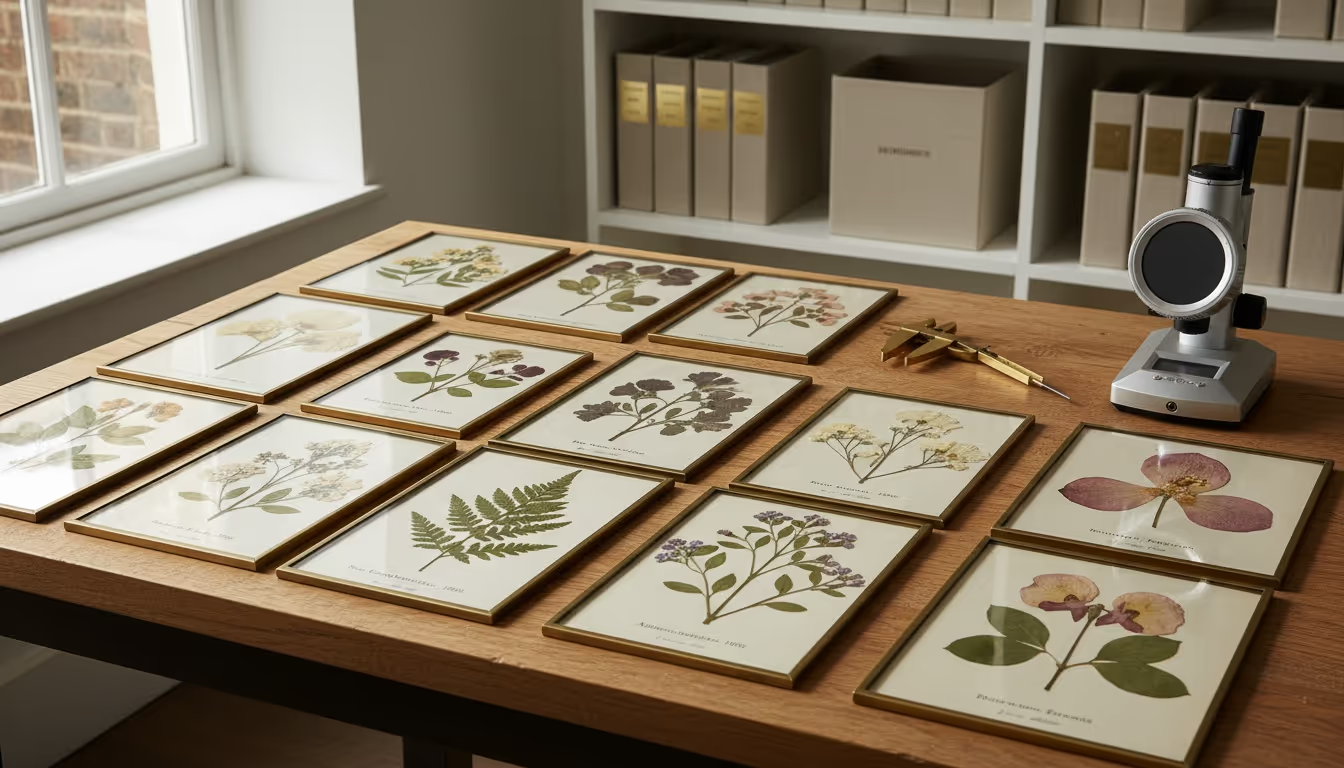
The assignment involved the identification and valuation of a collection of floral specimens intended for donation to a nonprofit's permanent collection. The scope of work included comprehensive analysis of client-provided photographs and accompanying information, detailed condition assessment, and preparation of documentation sufficient to support a charitable tax deduction. The appraisal was developed in full accordance with USPAP and Treasury IRS guidance related to non-cash charitable contributions, with the cost approach applied to estimate fair market value due to the specialized nature of the property and limited availability of market comparables.
Challenges
Our Approach
Project Outcome
Ready to start your appraisal?
Tell us the asset and what the value is for, and we will confirm scope, timing, and a fixed fee before any work begins.
Request an AppraisalFrequently Asked Questions
When is the cost approach appropriate for a donated collection?
When the property is specialized enough that comparable sales are absent or too sparse to support a conclusion. The cost approach asks what it would take to assemble equivalent material today, adjusted for condition and any loss in utility. It is the right tool for specimen and study collections that rarely change hands, and USPAP requires the report to explain why the sales comparison approach was set aside rather than simply omitting it.
How is a specimen collection valued when individual pieces have little market?
The collection is often worth more assembled than its parts are separately, because the work of gathering, identifying and preserving the material is itself what a receiving institution values. Where that is true, the analysis values the collection as a unit and documents the reasoning. Where it is not, the pieces are valued individually and summed. The report states which premise was used.
Does accession into a museum's permanent collection affect the appraisal?
It does not change fair market value, but it bears on the donor's deduction. Property accessioned into a collection and used in the institution's exempt work is generally a related use, which matters under the tangible personal property rules. It also usually means the donee will sign the Form 8283 acknowledgment and be subject to the reporting requirement if it disposes of the property within three years.
How is condition assessed for preserved botanical material?
By documented observation of the specific deterioration that affects this material: fading, brittleness, pest damage, mount integrity and the state of any labels or documentation. Where the assessment is made from photographs rather than in hand, the report says so and records what could and could not be evaluated. Condition drives value for organic material more than for almost any other property type.