
Fabrication Equipment Appraisal for Loan Collateral
Fabrication equipment appraisal for loan collateral, covering metalworking machinery, shop assets, and production equipment pledged against a credit facility. AppraiseItNow appraised a Washington manufacturer's fabrication assets from client inventories and images, researching recent comparable machinery transactions and adjusting for age, condition and specification.
Project Overview
Assignment Summary
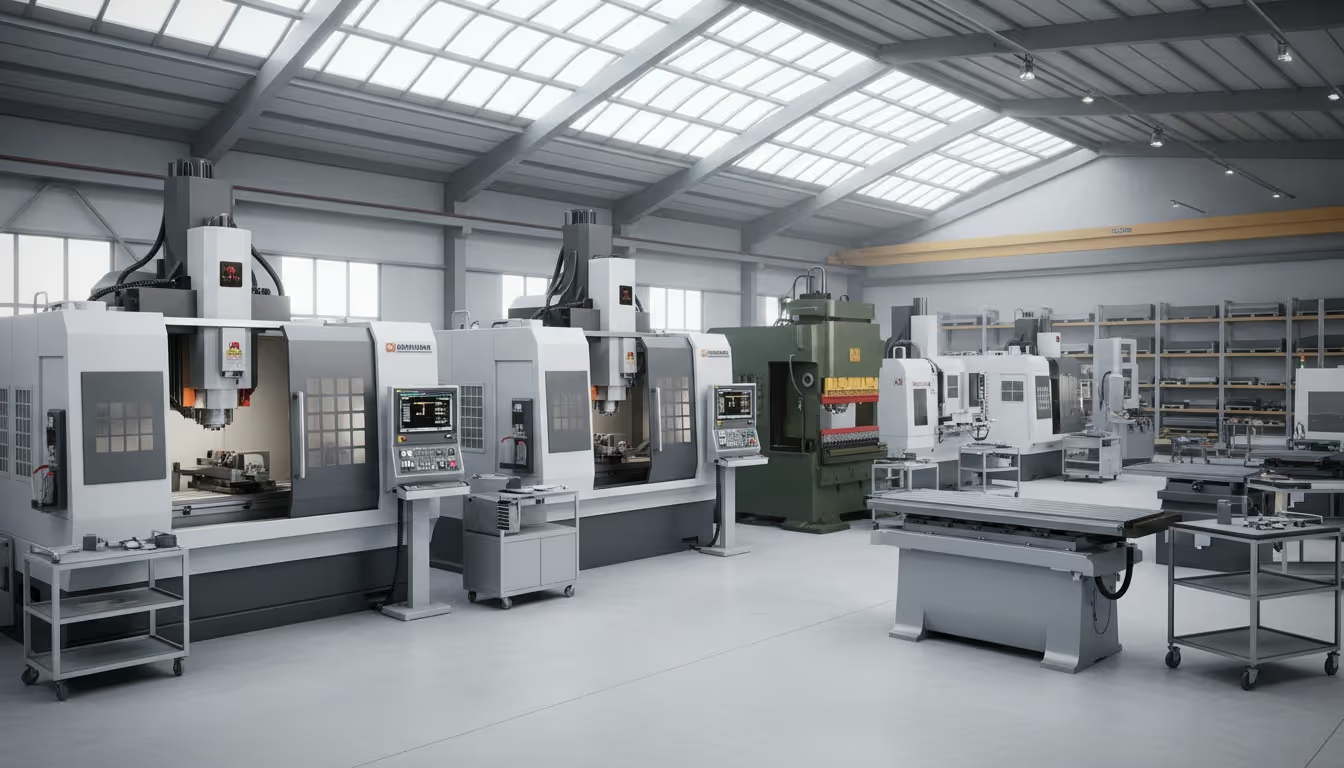
The appraisal covered a collection of fabrication assets and associated machinery used in a manufacturing setting. The scope of work included item identification and description, condition observations derived from provided images, and research into recent comparable sales in the relevant machinery and equipment markets. The assignment followed the 2024 Uniform Standards of Professional Appraisal Practice and used the sales comparison approach as the primary valuation method. An extraordinary assumption was applied that the information and images supplied by the client were accurate and complete.
Challenges
Our Approach
Project Outcome
Ready to start your appraisal?
Tell us the asset and what the value is for, and we will confirm scope, timing, and a fixed fee before any work begins.
Request an AppraisalFrequently Asked Questions
What value premise do lenders want on machinery collateral?
Most asset-based lenders work from a liquidation premise rather than fair market value, because the question behind the loan is what the collateral recovers if the borrower fails. Orderly liquidation value assumes a managed sale over a defined marketing period; forced liquidation assumes an immediate auction. Both are lower than fair market value, and the advance rate is set against whichever the lender specifies.
Why is specialized fabrication equipment harder to value than general machine tools?
Because the buyer pool is smaller. A standard lathe or press brake trades in a deep national market with abundant sale data; a purpose-built or heavily modified fabrication cell may have a handful of realistic buyers nationwide. Thin markets mean wider value ranges and larger liquidation discounts, and the report should show that rather than presenting false precision.
How does condition get documented when the appraisal is desktop-based?
From client inventories, photographs and maintenance records, with an extraordinary assumption that the information supplied is accurate and complete. That assumption is disclosed. For a lending engagement it is worth knowing that many lenders require an on-site inspection above a certain exposure, so the scope should be confirmed with the lender before the desktop route is chosen.
Does installed tooling count as part of the collateral?
It depends on the security agreement and on whether the tooling is separable. Dies, fixtures and custom tooling often have little value to anyone but the current operator, so they may add less to a liquidation conclusion than their cost suggests. We identify tooling separately rather than folding it into machine values, so the lender can see what is genuinely realizable.