
Industrial Robotic Arm Charitable Donation Appraisal
Industrial robot appraisal for charitable donation substantiation, covering six-axis robotic arms, controllers and automation cells donated to educational and nonprofit programs. AppraiseItNow appraised a California donation of a 2022 Mitsubishi Electric RV-8CRL-D-S15 six-axis robot, testing secondary-market sales evidence against a cost approach cross-check.
Project Overview
Assignment Summary
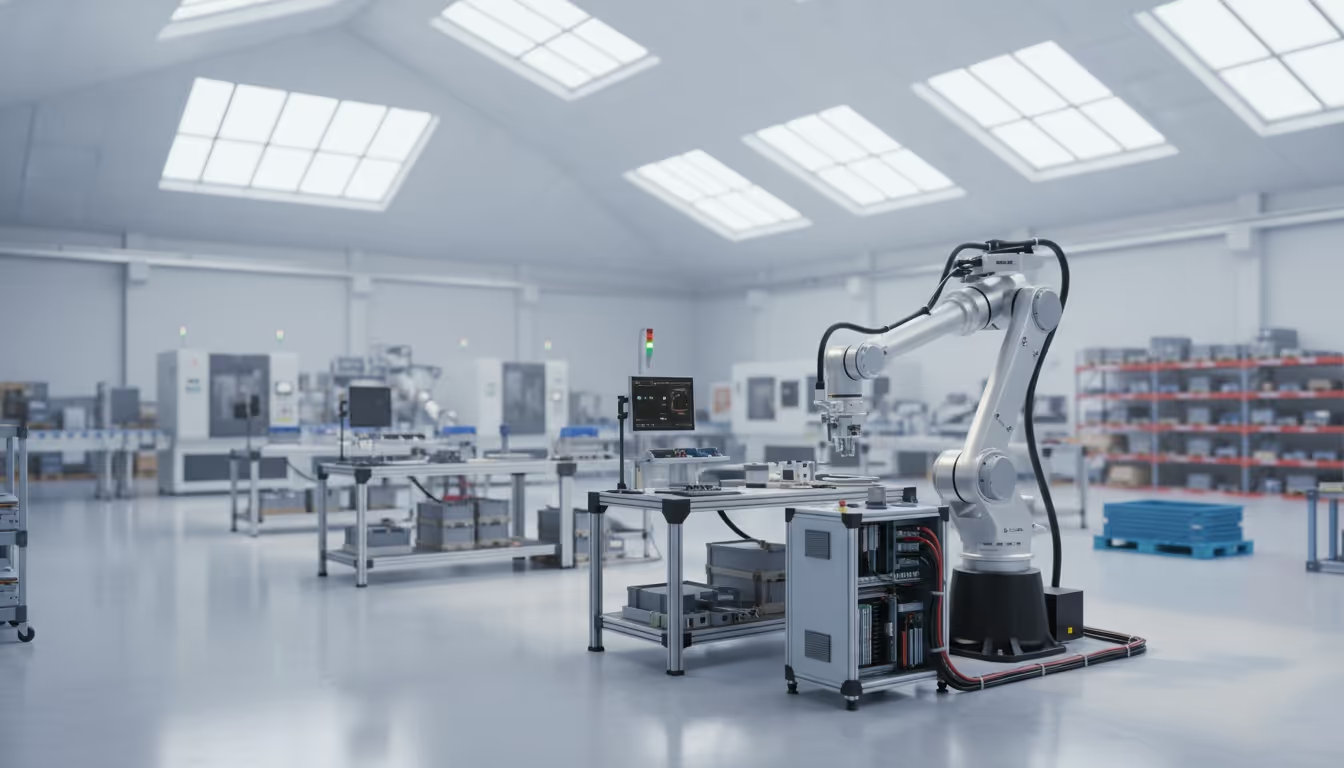
The scope of the engagement included identifying and examining a 2022 Mitsubishi Electric 6-axis industrial robotic arm (model RV-8CRL-D-S15) via digital images and client documentation, researching market activity in the secondary market for similar industrial robots, and developing a defensible value conclusion for charitable contribution reporting. The primary valuation method applied was the sales comparison approach, with the cost approach used as a supporting check. The assignment followed professional standards for qualified appraisals for charitable donation and provided the signed documentation required for tax reporting. All analysis relied on the information supplied by the client and on market data gathered from credible industry sources.
Challenges
Our Approach
Project Outcome
Ready to start your appraisal?
Tell us the asset and what the value is for, and we will confirm scope, timing, and a fixed fee before any work begins.
Request an AppraisalFrequently Asked Questions
How quickly does industrial automation equipment depreciate?
Faster than its service life would suggest. A robot with years of mechanical life left can lose a large share of its value within a few years because controller generations change, integration support moves on and buyers prefer current platforms. Recent manufacture is not the same as current specification, and the analysis prices the platform's actual secondary demand rather than its remaining mechanical life.
Is the controller valued with the arm or separately?
They are valued as the working pair, because that is how the market buys them. A manipulator without its matched controller is worth far less than the pair, since sourcing a compatible controller is expensive and sometimes impossible. Cabling, teach pendant and end effector are identified separately, since their presence changes what a buyer has to spend to put the cell into service.
Why use a cost approach as a check on a robotics donation?
Because the secondary market for a specific model can be thin enough that sales evidence alone leaves a wide range. Replacement cost new, less depreciation for age and technological obsolescence, gives an independent indication to test the sales conclusion against. Where the two diverge sharply, the report explains which was weighted and why rather than averaging them.
Does donating equipment to a school or training program change the value?
The fair market value is the same regardless of who receives it, since value is a market fact rather than a function of the donee. What the donee does with the property can affect the donor's deduction under the related use rule for tangible personal property, and a robot used in a school's engineering instruction is a very different case from one the school sells. That determination belongs with the donor's tax advisor.