
Medical Equipment Donation Appraisal for Charitable Giving
Medical equipment appraisal for charitable donation substantiation, covering diagnostic and imaging devices, supporting components and clinical equipment donated to qualified organizations. AppraiseItNow appraised a California donation of diagnostic and imaging-related equipment from photographs and client records, researching recent secondary-market transactions for comparable devices.
Project Overview
Assignment Summary
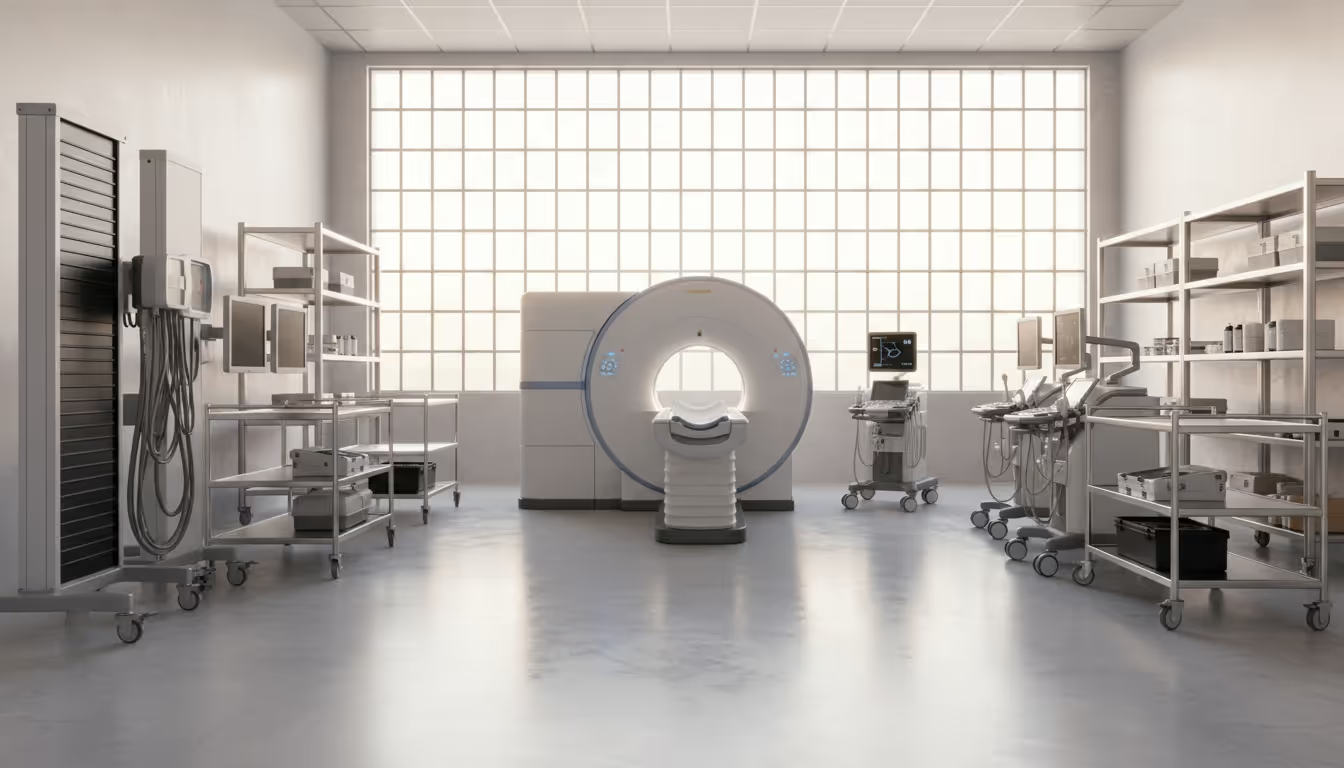
The assignment required identifying and describing a group of medical equipment, researching recent market activity for similar equipment, and reaching an opinion of fair market value for use in substantiating a non-cash charitable donation appraisal. The subject assets consisted of diagnostic and imaging-related devices and their supporting components. The appraiser applied the sales comparison approach and prepared the analysis using the Appraisal Report option under applicable professional standards. The report was written to conform with IRS requirements for qualified appraisals and to support the donor's completion of the required tax documentation.
Challenges
Our Approach
Project Outcome
Ready to start your appraisal?
Tell us the asset and what the value is for, and we will confirm scope, timing, and a fixed fee before any work begins.
Request an AppraisalFrequently Asked Questions
Does used medical equipment have a real resale market?
Yes, and a well-developed one. Refurbishers, secondary dealers and clinics in cost-sensitive settings buy used imaging, monitoring and diagnostic equipment continuously, and transaction data exists for most common device categories. What varies is depth: mainstream monitors and ultrasound units trade constantly, while niche or heavily regulated devices may see only a handful of sales a year.
Why do service records matter so much for a device donation?
Because a buyer of used medical equipment is buying the maintenance history as much as the hardware. Documented preventive maintenance, calibration and any manufacturer service contract history support both the condition claim and the device's eligibility for continued support. Without records, the appraisal proceeds under a stated assumption about condition and the conclusion is drawn more conservatively.
Are serial numbers necessary for a medical equipment appraisal?
They are strongly preferred. Serial numbers establish manufacture date, configuration and software revision, all of which move value within the same model name. Where they could not be captured, the report says the identification rests on visible model markings and client representation, and it notes what that limits.
Can equipment that is no longer supported still be donated at value?
It can have value, but usually much less than a supported unit, and the report should be explicit about it. Once a manufacturer ends parts and service support, the buyer pool narrows to those who can self-maintain or harvest components. Presenting an end-of-support device at a supported device's price is a common overstatement in this category.