
Mixed Antique and Modern Firearms Collection Insurance Appraisal
Firearms collection appraisal for insurance coverage, covering antique and historic arms, modern sporting rifles and heavily customized firearms scheduled on a policy. AppraiseItNow appraised a Tennessee collection of mixed antique and modern firearms, developing like-kind replacement costs from specialized dealers, resellers and auction channels rather than new retail.
Project Overview
Assignment Summary
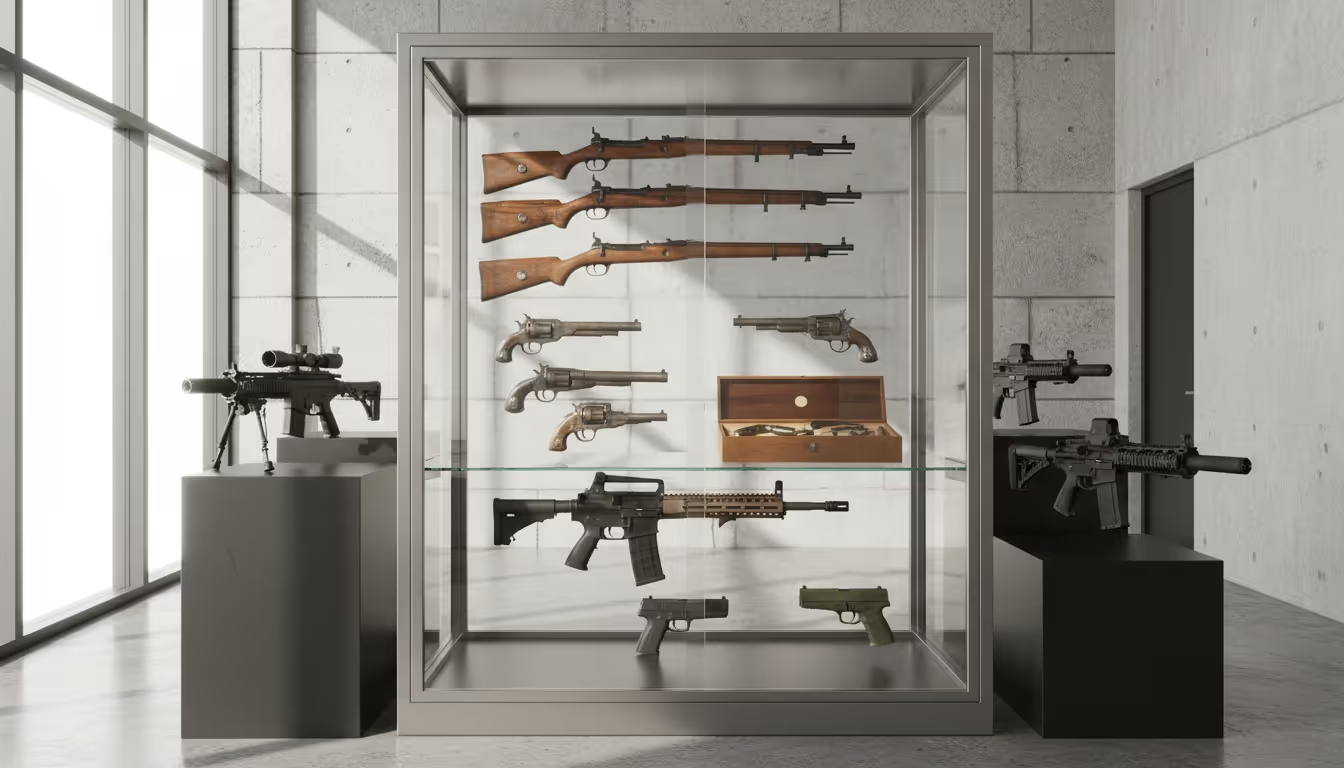
The scope encompassed identifying and cataloging each firearm, conducting thorough secondary market research, and developing replacement cost comparable conclusions specifically tailored for insurance purposes. The valuation emphasized like-kind replacement rather than new retail cost, reflecting the practical realities of the used firearms market. Our team researched multiple secondary market channels including specialized dealers, industry resellers, and auction platforms to capture current sale and listing activity for comparable models and configurations. The deliverable was a formal USPAP Appraisal Report complete with itemized valuations, comparable sales documentation, condition assessments, and supporting photography for each piece in the collection.
Challenges
Our Approach
Project Outcome
Ready to start your appraisal?
Tell us the asset and what the value is for, and we will confirm scope, timing, and a fixed fee before any work begins.
Request an AppraisalFrequently Asked Questions
Should a firearms collection be insured at new retail cost?
Not for most of it. Replacement of a collection means acquiring like-kind pieces in comparable condition, and for antique, discontinued and used arms that happens in the secondary market rather than at a new-gun counter. Scheduling at new retail overstates the premium the owner pays on common items and still leaves historic pieces underinsured, because no new equivalent exists.
How are customized modern firearms valued for coverage?
By valuing the base firearm and then the modifications, on the evidence rather than on receipts. Custom work does not recover its cost dollar for dollar: some upgrades add value in the resale market, many add little, and a few reduce it by narrowing the buyer pool. Optics, triggers and barrels are documented individually so the schedule reflects what replacement would actually require.
Why do antique arms need their own comparable research?
Because they trade in a collector market driven by originality, maker, model variation and historical association, none of which correlate with what a modern firearm costs. Comparable evidence comes from specialist auctions and dealers in that field. Searching the general used market for a historic arm produces either nothing or the wrong number.
How often should a firearms schedule be updated?
When the collection changes materially, and periodically otherwise, because this market has moved substantially in both directions over the past decade. A schedule set years ago on a growing collection is usually wrong in a way the owner only discovers at claim time. Reviewing it alongside the policy renewal is the simplest way to keep it current.