What factors does North Carolina law require when appraising business equipment for tax?
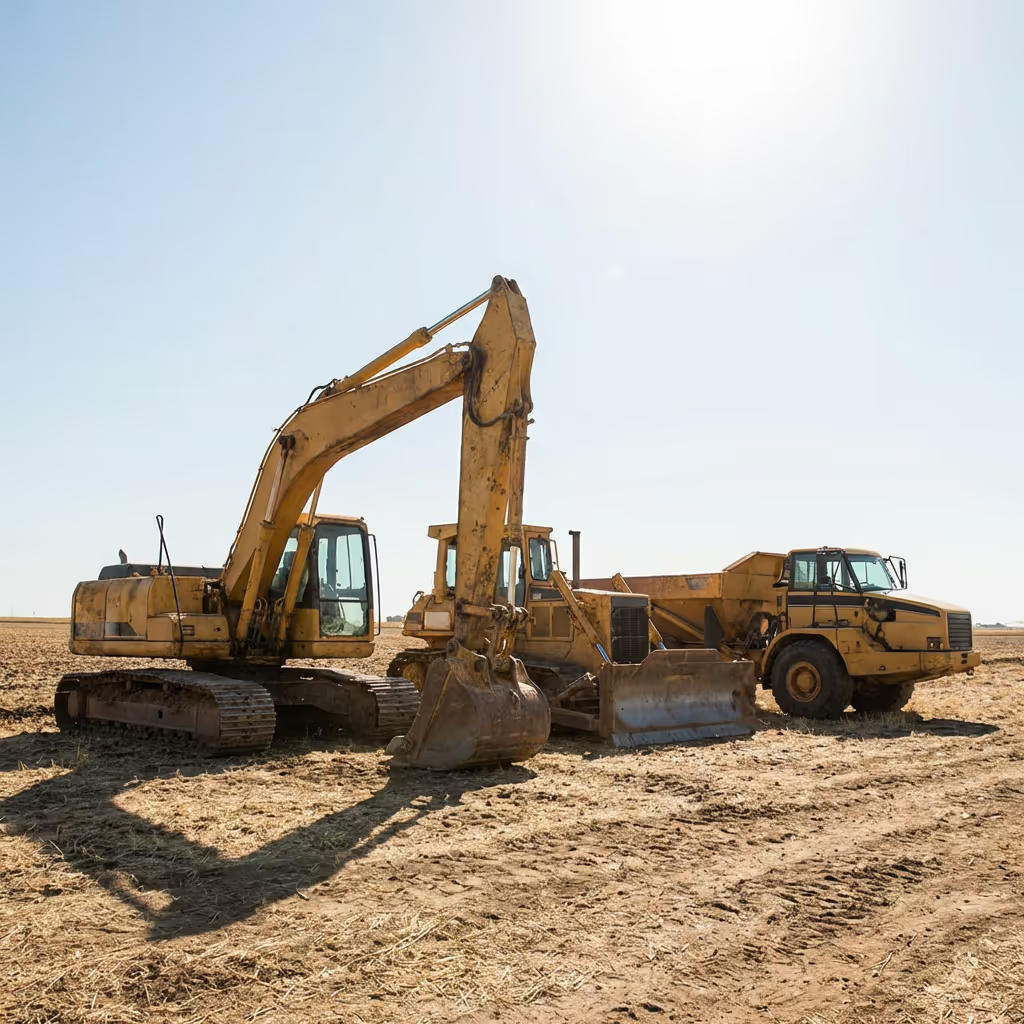
G.S. 105-317.1 directs consideration of replacement cost, sales of similar property, age, condition, productivity, remaining life, obsolescence, and economic utility whenever personal property is appraised, and for business equipment the appraiser must also weigh the taxpayer's records and filings. Those same elements are what a well-built independent appraisal documents.
Can I challenge the county's value on my machinery?
Yes, within 30 days of the initial notice of value; if no separate notice was mailed, the tax bill serves as the notice. If informal review with the assessor does not resolve it, you then have 30 days from the assessor's final decision to seek review by the county board of equalization and review. A market-supported appraisal is the core evidence for that appeal.
Do fair market value and liquidation value differ for the same machine?
Substantially. Fair market value assumes a willing buyer and seller with reasonable exposure time, while orderly and forced liquidation values assume compressed marketing periods and distressed sale conditions, and the spread between premises can be dramatic. We match the premise to the decision at hand, whether that is a sale, a loan, or a dispute.
Do North Carolina's eight-year reappraisals apply to machinery?
No. The octennial reappraisal cycle under G.S. 105-286 governs real property. Business machinery and equipment is personal property appraised fresh every year as of January 1, which means depreciation, obsolescence, and market shifts can move its taxable value annually rather than waiting for a county-wide revaluation.
Is farm equipment depreciated on a special schedule in North Carolina?
Yes. Under G.S. 105-317.1(b1), any county that uses a cost approach for taxable farm equipment must apply the depreciation schedule the Department of Revenue publishes on its website, creating one statewide pattern for farm machinery. Other equipment classes leave counties more discretion, so identical-looking assets can be depreciated quite differently for tax.







.jpeg)