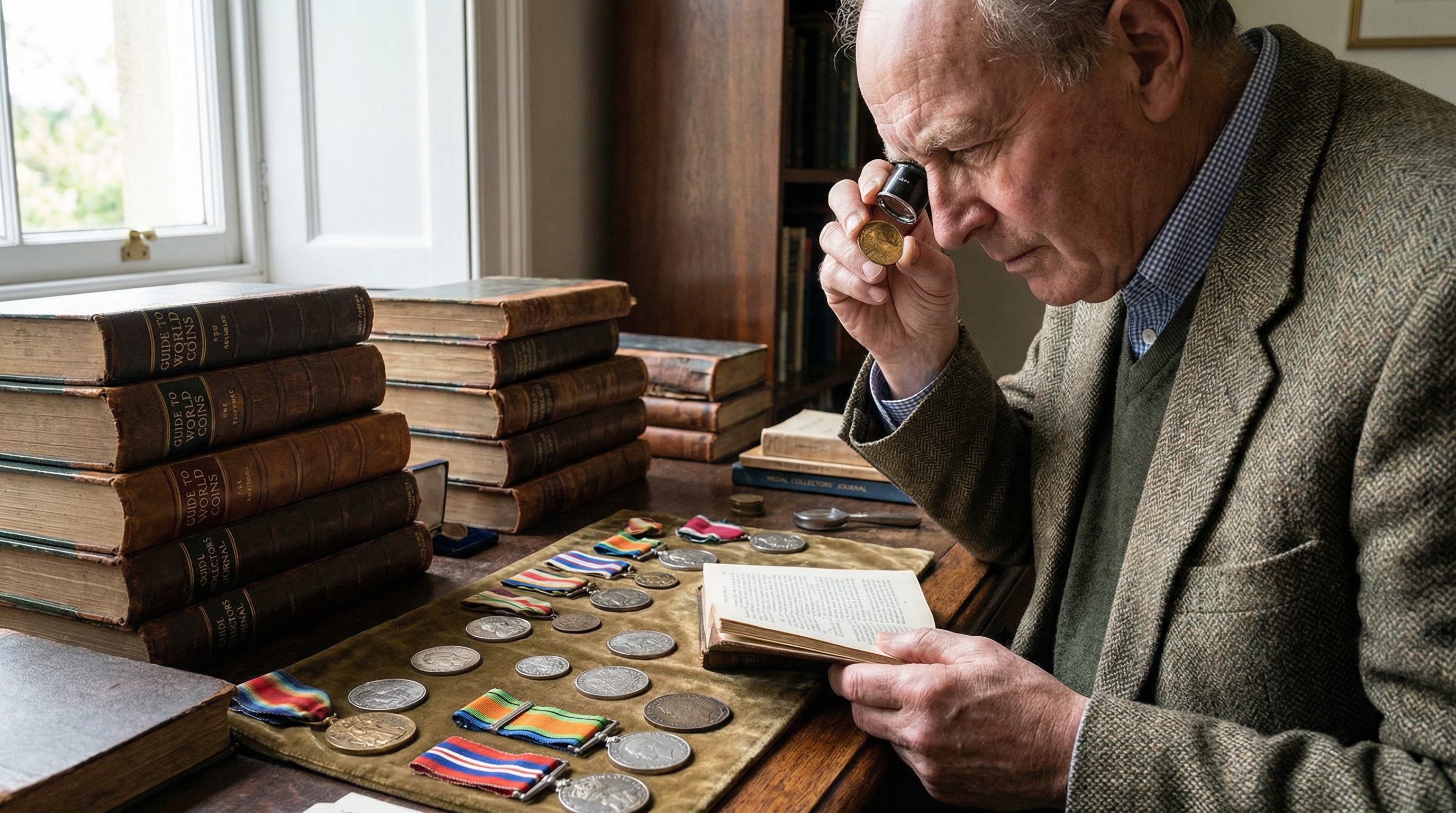
Most people who ask for a coin appraisal have inherited a collection, are scheduling one for insurance, or need a value for a tax filing. Whatever brought you here, the process is more structured than the drop-in-and-get-an-offer experience many owners expect from a coin shop. Here is what happens when we appraise coins, what we need from you, and what the finished report does and does not say.
One point shapes everything below: we appraise coins, which means we develop and document an opinion of value. We do not grade coins, authenticate them, or certify them as genuine. Those are separate services performed by independent grading companies.
A Coin Appraisal Is an Opinion of Value, Not a Grade
Grading assigns a condition score on a standardized scale and, at a third-party grading service, usually comes with authentication and encapsulation. Appraising takes the coin as it is, including any grade it already carries, and answers a different question: what is this worth, under a stated definition of value, on a stated date, in a stated market.
The two work together. If your coins are already in graded holders, that documentation strengthens the analysis considerably, because condition is settled by a specialist and we can concentrate on market evidence. If they are raw, we describe condition as observed and account for the uncertainty rather than papering over it. What we will not do is assign a grade ourselves or represent a coin as authentic. Where authenticity is genuinely in question and the stakes justify it, we say so and recommend grading before the appraisal is finalized.
Date, Mint Mark, Condition, and Rarity Drive Coin Value
Two coins of the same denomination and year can differ in value by orders of magnitude. The variables that separate them are well understood.
Our analysis works through the following for every coin or lot:
- Date and mint mark, since certain year and mint combinations were struck in far smaller numbers than others
- Condition as observed, including wear, surface quality, strike, and any cleaning or damage
- Existing third-party grading, where the coin is encapsulated and its grade documented
- Rarity in the relevant market, measured by how often comparable examples actually trade
- Metal content and weight, which sets a floor for gold, silver, and platinum issues
- Varieties and mint errors, which can carry substantial premiums when correctly identified
Rarity is the variable owners most often misjudge. Age alone does not create it. Many nineteenth century coins survive in large numbers and trade modestly, while certain twentieth century issues are genuinely scarce in high grade. The test is not how old a coin is but how hard a comparable example is to find when someone wants one.
The Purpose of the Appraisal Decides Which Value We Report
Before we look at a single coin, we need to know what the appraisal is for, because different purposes call for different definitions of value and produce different numbers from the same collection.
These are the assignments we handle most often:
- Estate and probate work, which calls for fair market value as of the date of death and is covered in our estate appraisal services
- Charitable donation, where the IRS requires a qualified appraisal for claimed deductions above certain thresholds
- Insurance scheduling, which calls for replacement cost rather than resale value
- Divorce and equitable distribution, where a neutral value both parties can rely on is the point
- Planning and recordkeeping, where an owner simply wants a documented baseline
Fair market value is the price a coin would bring between a willing buyer and a willing seller, neither compelled to act and both reasonably informed, as defined in IRS Publication 561. Replacement cost asks a different question: what would it take to obtain a comparable coin in the retail market today. For a collection of any size, the gap between those two figures is usually meaningful, which is why an insurance schedule should not be reused for an estate filing.
If the appraisal supports a charitable deduction of more than $5,000 in donated property, the IRS requires a qualified appraisal and Form 8283 filed with the return. We prepare those reports in accordance with the qualified appraisal requirements. Whether a deduction is allowed is decided by the IRS, not by us.
Coin Appraisals Are Done Online by Default
You do not need to box up a collection and carry it anywhere. We appraise coins online from photographs and documentation you send, so the coins stay in your possession and in whatever storage they are already in. For large or complex collections, or where the assignment calls for it, we arrange an on-site inspection instead.
The engagement follows a consistent shape: we confirm the purpose, effective date, and scope, then quote a fixed fee; you send images and any paperwork; our appraiser identifies and catalogs the coins, researches comparable sales in the appropriate market, and develops the conclusion; you receive a written report.
Photographs and Records That Make a Coin Appraisal Possible
The quality of the images largely determines how precise the analysis can be, so this step repays the effort.
Send whatever you have in these categories:
- Clear, well-lit photographs of both faces of each coin, with the date and mint mark legible
- Images of grading service labels and certification numbers for any encapsulated coins
- An inventory list if one exists, even an informal or inherited one
- Purchase receipts, dealer invoices, or auction paperwork showing what was paid and when
- Prior appraisals or insurance schedules covering the same coins
Leave the coins in their current holders and do not clean them. Cleaning removes original surfaces and reduces value on most collectible issues, and it cannot be undone. If a coin is loose, photograph it where it sits rather than handling the faces.
Numismatic Coins and Bullion Are Valued Differently
Bullion coins derive value primarily from metal content and purity, so they track the underlying spot price closely and carry a modest premium over it. Numismatic coins derive value from rarity, condition, demand among collectors, and the specific issue, which can put them far above melt.
The line matters in practice because the two require different evidence. Valuing bullion means establishing weight, fineness, and the applicable premium on the effective date. Valuing a numismatic coin means researching what comparable examples have actually sold for. Most inherited collections contain both, and part of the appraiser's job is sorting them correctly rather than applying one method across the whole holding.
Coin and Currency Appraisals Rely on Different Evidence
Paper money shares the general framework but changes the variables. Condition analysis turns on folds, creases, corner wear, paper quality, and whether a note has been pressed or repaired. Serial numbers matter, star notes and replacement notes carry premiums, and series and signature combinations can separate two otherwise identical notes. Many collections include both coins and currency, and we appraise them together under a single assignment.
What a Coin Appraisal Report Contains
A report that is worth commissioning shows its work. Ours states the purpose and intended use, the definition of value applied, the effective date, and the scope of the assignment, then describes the coins and lots, explains the market evidence and methodology behind the conclusion, and states the value. It is prepared in compliance with the Uniform Standards of Professional Appraisal Practice (USPAP), which sets the ethical and reporting requirements for the profession and is what makes a report defensible to the party reviewing it.
Our appraisers hold credentials with leading organizations such as the American Society of Appraisers (ASA) and the International Society of Appraisers (ISA).
Coin Appraisal Fees Are Quoted as a Fixed Amount
Cost follows scope: how many coins, how much research each requires, whether the collection is already cataloged, and what type of report the intended use demands. A single gold piece and a five-thousand-coin accumulation are not the same assignment. We quote a fixed fee once we understand what is involved, confirmed before any work begins, and we never charge by the hour or base a fee on the values we conclude. Turnaround depends on the collection, so tell us the deadline you are working against and we will confirm timing up front.
Frequently Asked Questions
Can you appraise a collection I have not sorted or inventoried?
Yes. Unsorted accumulations are common, particularly with inherited collections, and cataloging is part of what we do. It affects the scope and therefore the fee, so tell us roughly how many coins are involved when you ask for a quote.
Should I get my coins graded before the appraisal?
Not as a rule. Grading is worth its own cost and time for high-value coins where a certified grade materially changes the market, and it is rarely worth it for common material. We can tell you which coins in a collection are candidates.
Will the appraisal tell me what a dealer will pay?
No. An appraisal reports a defined value for a stated purpose, and a dealer offer reflects that dealer's inventory needs and margin. The two answer different questions, though a fair market value conclusion gives you a documented reference point when you evaluate an offer.
Do you buy coins you appraise?
No. We are a valuation firm only and have no interest in acquiring what we value, which is what keeps the opinion independent.
Can one appraisal cover both insurance and an estate filing?
Not usually, because the two require different definitions of value. If you need both, say so at the start and we can often develop both conclusions from a single research effort.
Getting Your Coins Valued
Tell us what you have and what the appraisal is for, and we will confirm the scope and a fixed fee before starting. Learn More About Coin Appraisals, or see how coins fit alongside the rest of a collection in our personal property appraisal service.