Business Appraisal for Estate Planning

5.0from 80+ client reviews

Business appraisal services for estate planning, covering lifetime gifts, trust funding, Roth IRA conversions, buy-sell reviews, and eventual Form 706 reporting, prepared in accordance with USPAP. AppraiseItNow values closely held corporations, family limited partnerships, LLC membership interests, and professional practices nationwide.

Get an instant response

DEFENSIBLE, USPAP-COMPLIANT BUSINESS APPRAISAL REPORTS — QUALIFIED FOR THE IRS, PROBATE COURTS, AND ESTATE ATTORNEYS.

  • IRS
  • United States Courts
  • Chase
  • Bank of America
  • State Farm
  • Goodwill Industries
  • Wells Fargo

The business valuation team behind your fair market value appraisal

Between them, our business valuation appraisers hold ASA, ABV, and CFA designations, and every report is written to USPAP for the IRS, probate courts, and estate attorneys.

Joe Kattan

Joe Kattan

Owner & CEO

Joe founded AppraiseItNow to make a certified, USPAP-compliant appraisal as simple to order as anything else online. A former Bain & Company strategy consultant, Joe leads the entire team and specializes in strategy, growth, and the firm's tech capabilities.

Justin Ramirez

Justin Ramirez

Business Valuation Expert & Appraiser

ASA, ABV, and CFA charterholder. Since 2016 Justin has valued businesses for estate and gift tax, purchase price allocations, fairness opinions, lending, and buy-sell agreements, across manufacturing, services, retail, and pre-revenue biotech.

Raymond Ghelardi

Raymond Ghelardi

Business Valuation Expert & Appraiser

Accredited Senior Appraiser with the American Society of Appraisers. Raymond values capital stock, business enterprises, stock options, and intangible assets.

Aron Blue

Aron Blue

Client Success Manager

Manages each engagement from the first enquiry to the delivered report, and keeps you posted at every step along the way.

  • USPAPWritten to the Uniform Standards of Professional Appraisal Practice
  • Fair market valueThe IRS definition of value that Form 706, probate courts, and gift tax filings apply
  • American Society of AppraisersAccredited Senior Appraiser
  • AICPAAccredited in Business Valuation
  • CFA InstituteChartered Financial Analyst
  • The Appraisal FoundationAuthorized by Congress as the source of appraisal standards
Standard of value
Fair market valueRevenue Ruling 59-60's willing buyer, willing seller test, applied as of the date of each transfer the plan makes.
Interests valued
Whole to minorityFamily limited partnership and family LLC units, voting and non-voting shares, LLC interests moving into trusts, and professional practices.
Discounts
DLOC and DLOMDocumented discounts lower the value each gift consumes against the exemption, with the support stated in the report.
Written for
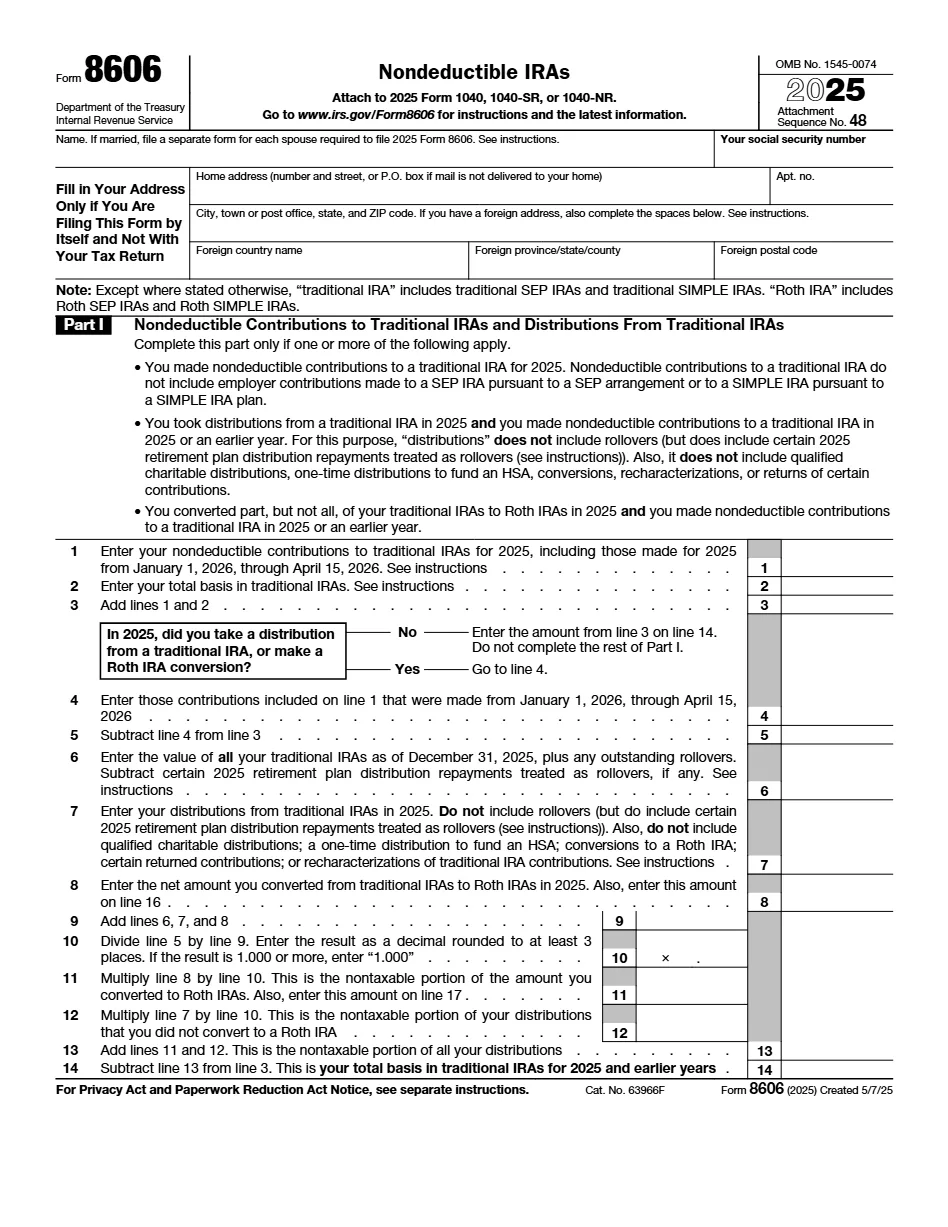
The IRS reviewerForm 709 for lifetime gifts, Form 706 at death, Form 8606 for a Roth conversion, and the attorney and CPA drafting around them.

AppraiseItNow prepares business valuations for estate planning that hold up in the filing each transfer eventually supports

A business appraisal for estate planning establishes what a closely held company, or an interest in it, is worth before that value flows into a gift, a trust, a Roth conversion, or an estate tax return. Private companies have no quoted price, so the IRS tests reported values under Revenue Ruling 59-60: what a willing buyer and willing seller would agree to on a specific date. With the federal estate and gift tax exemption at $15 million per person (2026), the value we conclude is what each transfer consumes against it.

What we value

The entity structures estate planners actually use

We value the interests a plan moves, as they are held, with their rights and restrictions:

  • Family limited partnership and family LLC interests
  • Voting and non-voting shares after a recapitalization
  • S corporation and C corporation stock
  • LLC interests moving into irrevocable and grantor trusts
  • Interests funding GRATs and charitable remainder trusts
  • Medical, dental, legal, and accounting practices
  • Holding companies with mixed portfolios
  • IRA-held interests ahead of a Roth conversion

Valuation date

One value per transfer, as of its own date

Fair market value is date-specific. A gift is valued as of the gift date, an inherited interest as of the date of death, a trust as of the day it is funded, and an IRA-held interest as of the day it converts to a Roth. Multi-year gifting programs get an updated valuation for each round of transfers rather than a reused one.

Discounts

Lack of control and marketability, tied to the interest transferred

Most estate plans move minority or non-voting interests, and those are rarely worth a pro-rata slice of the whole company. We quantify discounts for lack of control and lack of marketability from the interest's own rights, transfer restrictions, and liquidity, and state the support in the report, because the discount is the first thing an IRS reviewer tests.

We coordinate each estate planning valuation with your attorney and CPA so it fits the plan documents and the return

Business valuations run remotely, from records the company and its advisors already keep. Our appraisers hold credentials with organizations such as the ASA, NACVA, and AICPA (ABV), and engagements range from one valuation supporting a single transfer to recurring updates across a multi-year plan.

Documents

What we work from

The engagement starts with the documents that define the company and the interest being transferred:

  • Financial statements and tax returns
  • Operating, shareholder, or partnership agreement
  • Buy-sell provisions and transfer restrictions
  • Ownership schedule and recapitalization documents
  • Trust instrument or plan documents
  • Prior valuations and transactions in the interest

Approaches

Income, market, and asset-based approaches under Revenue Ruling 59-60

We select and document the approaches from the company's earning capacity, book value, dividend-paying capacity, goodwill, prior sales of the interest, and comparable market data, and explain why each was applied or set aside. Operating agreements and buy-sell provisions are read first, because they directly affect what an interest is worth.

The report

Qualified appraisal standards and adequate disclosure

Each report is structured to meet IRS qualified appraisal standards and the adequate disclosure rules that start the three-year statute of limitations on a reported gift, so the value cannot be revisited once that period has run. The same report is written to fit the plan documents and the return without rework.

Valuation Discounts Shape How Much of the Business Each Transfer Moves

Most estate plans transfer minority or non-voting interests, and their fair market value is rarely a pro-rata slice of the whole company. Documented discounts lower the value each gift consumes against the exemption, and the same analysis must hold up when the IRS reviews the return.

Independent by rule

Unbiased does not mean undiscounted.

We do not start from the number you would like to report. We start from the interest itself: its rights, its restrictions, its liquidity. The discount is whatever that evidence supports, and the report walks an IRS reviewer through every step. Three things keep the conclusion independent:

  • Prepared in accordance with USPAP, which bars an appraiser from taking a fee that depends on the value reported.
  • Fair market value as the Treasury defines it: a willing buyer and a willing seller, neither under any compulsion, both informed.
  • Argued under Revenue Ruling 59-60, the same framework the IRS trains its own valuation analysts on.
How a discount is builtIllustrative. No figure here is a quote.
  1. Pro rata share
  2. Less: lack of control
  3. Less: lack of marketability
  4. Fair market value

DLOC

Discount for Lack of Control

A minority holder cannot set distributions, compensation, or the timing of a sale, so a buyer pays less for the interest than for a controlling stake.

What we examine to size it:

  • Voting, veto and consent rights the interest carries
  • Who decides distributions, salaries and reinvestment
  • Whether the holder can force a sale, dissolution or redemption

DLOM

Discount for Lack of Marketability

Closely held shares have no ready market, and the time and cost of finding a buyer make the interest worth less than freely traded stock.

What we examine to size it:

  • Transfer restrictions and rights of first refusal in the governing documents
  • Distribution history and the expected holding period
  • The pool of realistic buyers and any path to liquidity

The Support Behind Every Discount We Apply

These discounts are not an appraiser’s courtesy. Decades of IRS guidance, Tax Court decisions and market evidence define them, and the same sources are what an examiner reads:

  1. 1959IRS guidance

    Revenue Ruling 59-60

    The IRS framework for valuing closely held stock: eight factors, among them the size of the block being valued and the market for it.

  2. 1971Market evidence

    SEC Institutional Investor Study

    The first large study of what buyers paid for restricted shares, and the start of decades of restricted stock and pre-IPO studies. The IRS recognized their relevance in Revenue Ruling 77-287.

  3. 1982Tax Court

    Estate of Andrews, 79 T.C. 938

    A family member’s shares are valued as what they are, not as part of the family’s combined control, and lack of marketability is a discount in its own right.

  4. 1993IRS guidance

    Revenue Ruling 93-12

    The IRS accepted minority discounts on transfers to family members even where the family as a whole controls the company, reversing its earlier position in Revenue Ruling 81-253.

  5. 1995Tax Court

    Mandelbaum v. Commissioner

    Judge Laro’s list of factors for sizing a marketability discount, still the checklist courts, the IRS and appraisers work from.

  6. 2009IRS guidance

    IRS DLOM Job Aid

    The guide the IRS wrote for its own valuation analysts, cataloguing the restricted stock studies, pre-IPO studies and analytical models that support a discount for lack of marketability.

Every discount we apply is supported with empirical evidence, including restricted stock studies and market transaction data, and documented under the Revenue Ruling 59-60 framework. The facts of each interest determine the discount; we never apply a preset percentage.

What clients say we are known for

AppraiseItNow Reviews: “The report was quite thorough as well” and “The team was highly knowledgeable, helpful, and efficient”

  1. Being the appraiser they come back to“I highly recommend their appraisal services, especially for private companies” Steve R.Mentioned in 44 reviews
  2. Answering fast, and staying reachable while the work runsMentioned in 34 reviews
  3. Showing the research and the comparables behind the number“Their work was quick, thorough” Jeff H.Mentioned in 29 reviews
  4. Delivering the finished report ahead of the deadlineMentioned in 21 reviews
  5. Taking on items other appraisers had already turned downMentioned in 14 reviews

Across 80+ published AppraiseItNow reviews the picture is consistent: every one is from a client who paid us for an appraisal, and the three things they raise most often are that they would hire us again, how quickly we answer, and how much research is visible in the report.

  • Responsive, professional, first class deliverables -- especially considering that that the appraised assets are extremely complex financial assets with little by way of comps. The deliverable satisfied my accountants and advisers as being more than adequate to support the valuation needed to complete a conversion to a Roth IRA
    Dave T., Ocala, FL ·

    Business Valuation Appraisal for IRA Conversion

  • Joe and Aron were extremely impressive - the entire process went very smoothly. They were always quick to respond to any questions I had and could not have been more helpful. They were aware of some tight time restrictions I had and made sure I received my reports in a timely fashion. I highly recommend them to anyone needing a valuation.
    William L., Woodford County, IL ·

    Business Valuation Appraisal for Charitable Donation

  • I used AppraiseItNow to examine a contribution to a foundation. Their work was quick, thorough, and easy to work with, as they’ve developed a simple system for uploading documents. I plan to use them again.
    Jeff H. , New York, NY ·

    Business Valuation Appraisal for Charitable Donation

  • The team was highly knowledgeable, helpful, and efficient. I highly recommend their appraisal services, especially for private companies.
    Steve R., Northbrook, IL ·

    Business Valuation Appraisal for IRA Conversion

  • I found them professional & responsive. The report was quite thorough as well.
    Daniel L. , New York City, NY ·

    Business Valuation Appraisal for Charitable Donation

  • From the start they were very responsive, price competitive, and had a quick turn around time. Thank you so much to Joe who was very sweet in responding to my emails; I am looking forward to utilizing AppraiseItNow for many years to come.
    Chris S., San Clemente, CA ·
  • Very thorough and professional — great communication and outstanding service. Highly impressed with their work!
    Curt B. , Washington, UT ·

Frequently Asked Questions on Business Appraisals for Estate Planning

Do I need a gift tax or an estate tax valuation for my estate plan?

It depends on when the interest transfers: transfers during life are gifts valued as of the gift date and reported on Form 709, while interests you still hold at death are valued as of the date of death and reported on Form 706. Most estate plans eventually involve both, which is why the same company is often appraised several times over the life of a plan, once for each transfer.

Does moving a business interest into a trust require an appraisal?

Yes, when the transfer is a completed gift, as it is with most irrevocable trusts: the interest must be valued as of the funding date and reported on Form 709 with a qualified appraisal. Transfers to a revocable living trust are not gifts and trigger no filing, though many owners document the value anyway to support later planning decisions.

Can an existing business valuation be reused for a new transfer?

Generally no. Fair market value is date-specific, so each gift or trust funding needs a value as of its own transfer date. An appraisal prepared for last year's gift, a loan application, or a shareholder buyout does not substantiate this year's transfer, and multi-year gifting programs are typically supported by an updated valuation for each round of transfers.

Does a buy-sell agreement fix the value of a business for estate planning?

Not by itself. Under IRC Section 2703, a buy-sell price controls estate tax value only if the agreement is a bona fide business arrangement, is not a device to transfer wealth to family members for less than full value, and is comparable to arm's length terms. The Supreme Court's 2024 decision in Connelly v. United States, which held that corporate-owned life insurance proceeds increased a company's value despite the redemption obligation attached to them, shows how costly an unexamined buy-sell assumption can be.

Is a Roth IRA conversion part of estate planning?

Yes. Converting a traditional IRA to a Roth pays the income tax now, out of the owner's estate, so heirs inherit an account whose qualified distributions are generally tax-free instead of an income tax bill spread over the ten-year payout most non-spouse beneficiaries face. A Roth IRA also has no required minimum distributions during the owner's lifetime, so it can keep growing untouched. When the IRA holds a private business interest, the conversion needs a fair market value appraisal as of the conversion date, because that value is the taxable amount reported on Form 8606, and the same discounts for lack of control and marketability that apply to a gift apply here.