How is antique silver valued above its melt value?
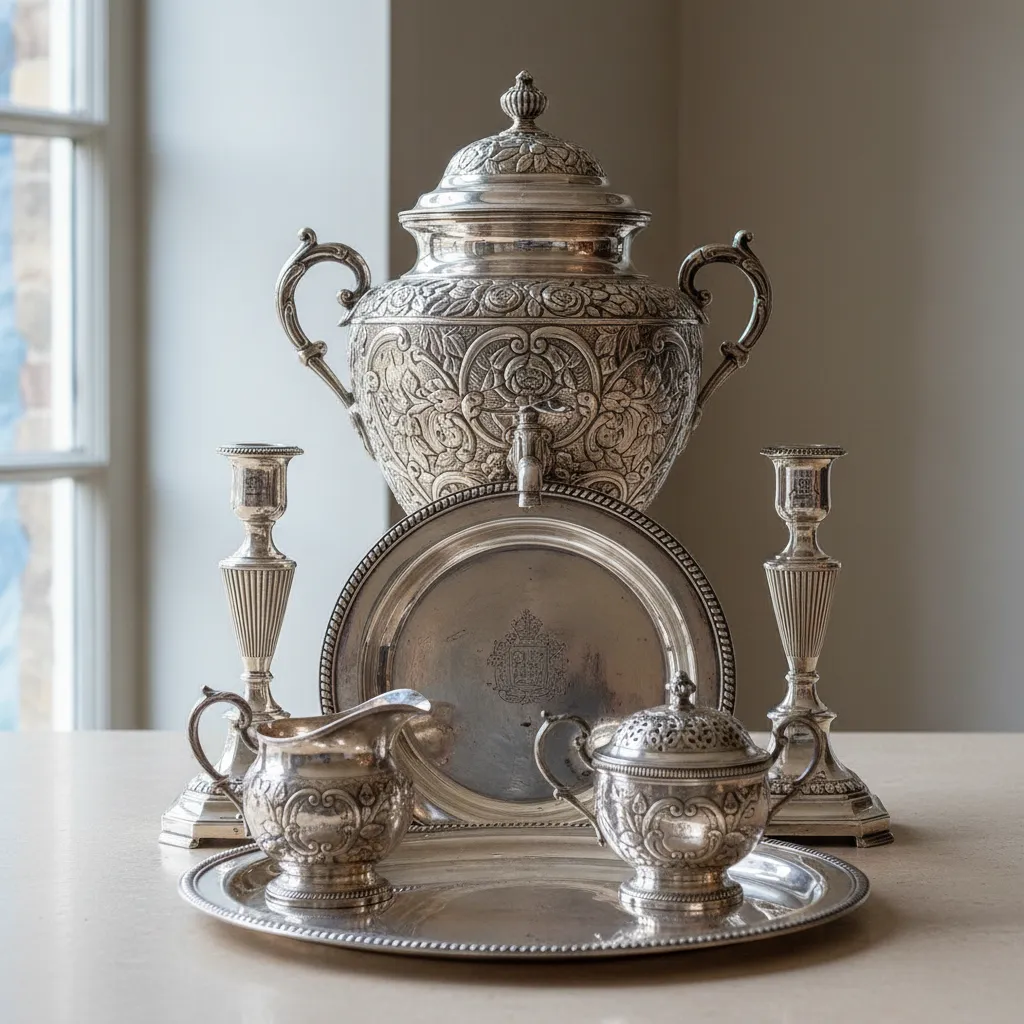
Melt value sets the floor: weight in troy ounces times purity (0.925 for sterling) times the current spot price. Our appraisers then add premiums for recognized makers, rare or discontinued patterns, complete services, and strong condition, supported by realized prices from venues such as Sotheby’s, Christie’s, Bonhams, and completed eBay sales. For damaged or common pieces, metal content may represent essentially the entire worth; for rare or historically important silver, collectible premiums can far exceed scrap value.
Is silver plate worth the same as sterling?
No. Plated items, often marked EPNS, EP, or A1, carry only a thin silver coating and should never be valued by weight at the sterling spot price. Pricing plated flatware as if it were solid sterling is one of the most common overvaluation mistakes we see. Where marks are ambiguous, nondestructive X-ray fluorescence (XRF) testing can confirm composition.
Why are knife blades excluded from a silver appraisal’s weight calculation?
Because knife blades are typically steel, and hollow handles or wooden components contain filler rather than silver. Only the sterling components are weighed when computing fine silver content. Owners who weigh entire pieces without these deductions can overstate melt value by a meaningful margin, which distorts estate, donation, and sale pricing.
What do hallmarks tell an appraiser about antique silver?
Hallmarks identify purity (STERLING, 925, 800), maker, town of assay, and often the date of manufacture through date letters. A credible report decodes and photographs the marks piece by piece, with tables listing pattern, maker, purity, weight, and condition. Generic descriptions without hallmark documentation weaken the defensibility of the value conclusion.
When does antique silver need a formal appraisal for tax purposes?
When it appears on an estate or gift tax return. Form 706 reports property at fair market value as of the date of death, and Form 709 requires accurate values for noncash gifts. For notable silver services, the IRS expects itemized descriptions with market support; reports based solely on insurer schedules or scrap estimates are vulnerable to challenge.



.jpeg)