How is militaria appraised?
Almost entirely through comparable sales in the collector market: documented recent sales of materially similar items, with premiums for verified provenance. Archives from major houses such as Rock Island Auction Company are a key price reference for higher-value pieces. Cost and income approaches generally do not apply, and a proper report explains why they were not used.
What makes one military medal worth more than another?
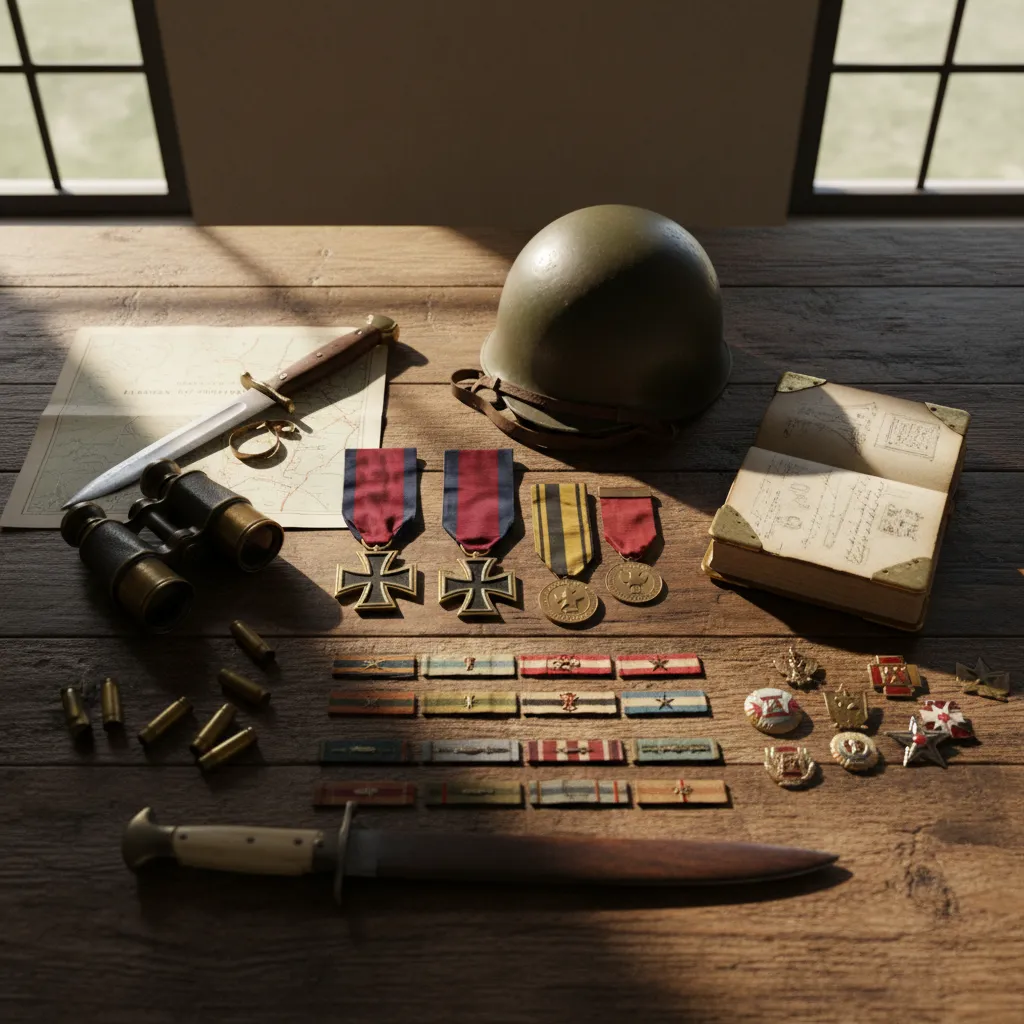
Unit, campaign, rarity of the award, and named or documented service, far more than metal content. A medal named to a specific individual with supporting research such as service records or gallantry citations can move from common to highly desirable, so we document naming, unit insignia, serials, and paperwork in detail.
Should I clean or polish militaria before an appraisal?
No. Collectors pay premiums for original surfaces, untouched ribbons, and uncleaned patina, and harsh cleaning can remove period finishes, alter color, and damage inscriptions. Evidence of cleaning or restoration is recorded and typically produces a downward adjustment against untouched reference sales.
Do family stories about a piece add appraisal value?
Only when documented. Provenance premiums require verifiable records: purchase receipts, discharge papers, unit histories, period photographs, or prior auction cataloguing. Unsupported oral history is treated as anecdotal, which is why heirs expecting a war-hero premium are sometimes disappointed.
Which value standard applies to insuring versus selling militaria?
Insurance schedules use retail replacement value, often based on dealer asking prices or upper-end auction results, while estate, donation, and sale decisions use fair market value as of the relevant date. Conflating the two can overstate an estate or underinsure a collection by 20 to 50 percent or more given observed militaria market spreads.



.jpeg)