How do appraisers value sterling silverware?
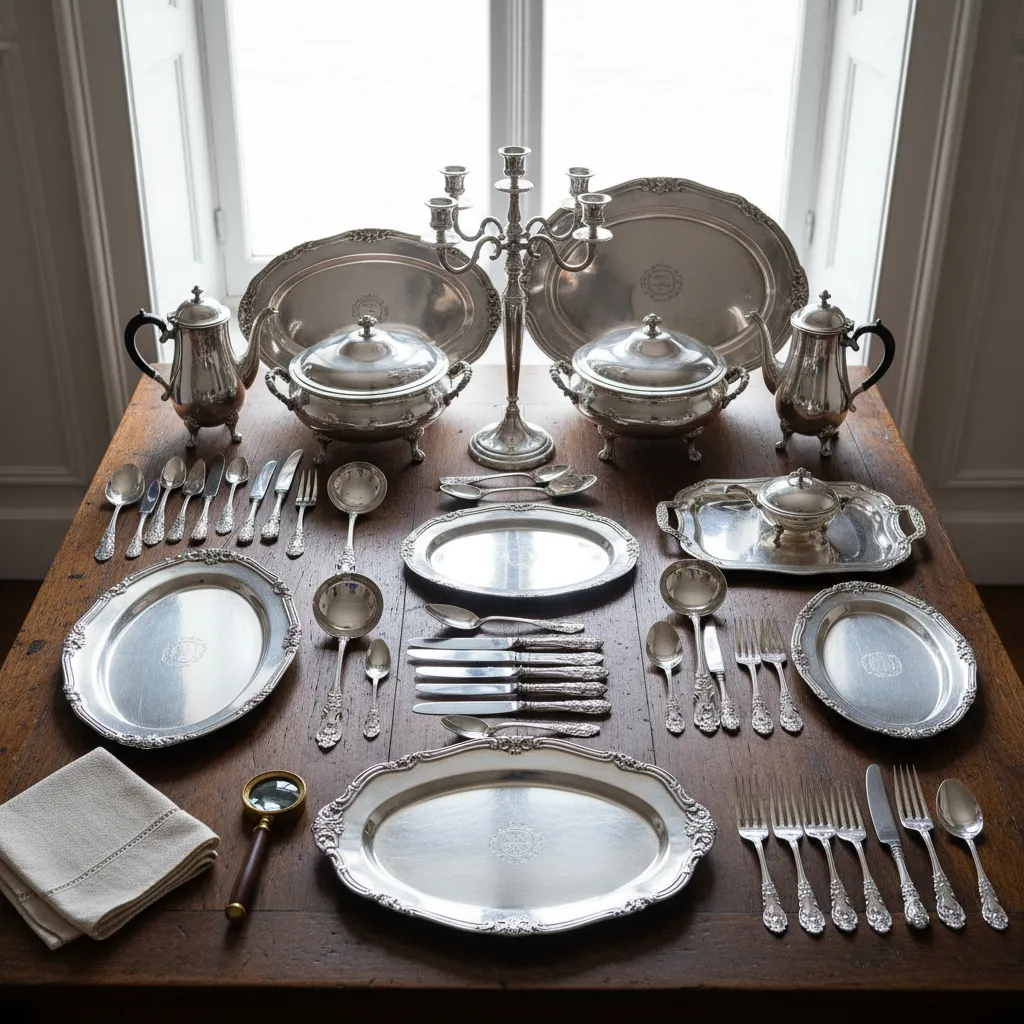
Mostly by the market approach: researching actual sale prices for the same maker, pattern, and condition at auctions, estate sales, and reputable dealers, with a cost-based replacement figure when the purpose is insurance. The melt calculation sets a floor, but pattern, maker, and completeness usually determine whether a set is worth melt or a multiple of it.
How is the melt value of silverware calculated?
Weigh the silver components separately, excluding non-silver parts such as knife blades and wooden handles, convert grams to troy ounces (one troy ounce is about 31.1 grams), multiply by purity (0.925 for sterling, 0.900 for coin silver, 0.800 for continental 800 silver), then by the spot price. Buyers and refiners typically pay only a percentage of that figure after fees and yield.
Is silverplate worth anything as scrap?
Essentially no. Marks such as EPNS, EP, A1, or Quadruple Plate indicate a base metal core with a thin silver coating, and the recoverable silver is usually insufficient to justify refining costs. Plated wares derive value mainly from decorative or collectible appeal. Genuine sterling is typically marked Sterling, 925, or .925; confusing the two is the most pervasive silverware valuation error we see.
Do pattern and maker matter more than silver weight?
Often, yes. Complete services in desirable patterns from makers like Tiffany & Co. and Gorham can command several times their metal content, which is why appraisers identify the exact pattern from hallmark guides, confirm set completeness, and research recent sales of that specific pattern and configuration. Scrapping flatware for weight without checking pattern premiums is a costly, irreversible mistake.
Should silverware be polished before an appraisal?
No. Overpolishing softens detail and reduces desirability, and removing monograms can lower value for collectors who prefer original surfaces. Present pieces as they are, with hallmarks visible and any original boxes or documentation alongside. Condition issues like dents and repairs will be documented either way; aggressive cleanup only risks destroying the features the market pays for.



.jpeg)