Is there a Kelley Blue Book for horse trailers?
No, there is no official KBB for horse trailers. The specialized Horse Trailer Blue Book, built from MSRP, dealer input, and actual sales records, plus NADA's travel trailer tables and dealer and auction records fill the gap. Treating unofficial guides as standardized KBB data on insurance or loan paperwork invites challenge.
What do used horse trailers typically sell for?
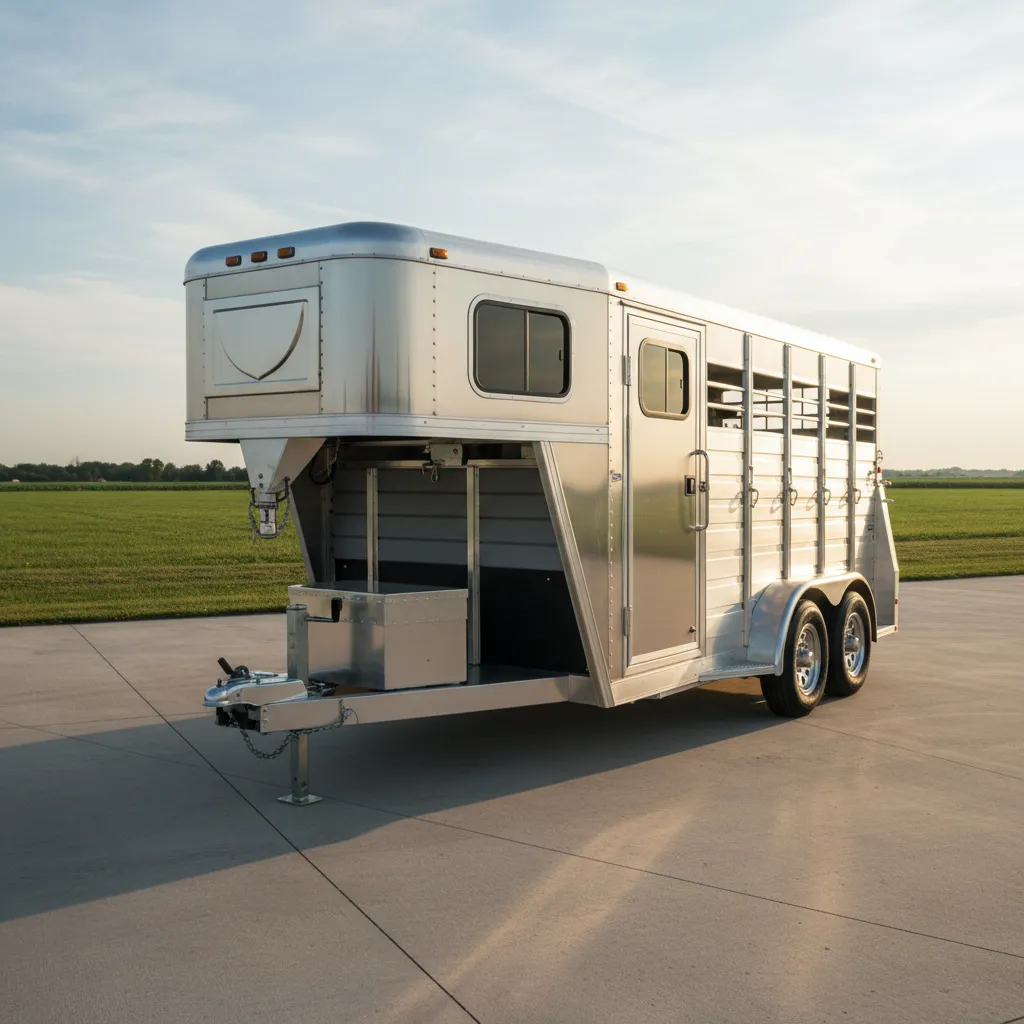
Basic two-horse bumper-pulls commonly bring $3,000 to $10,000, three-horse goosenecks with tack rooms roughly $8,000 to $25,000, and living-quarters trailers about $15,000 to $80,000 or more depending on brand, size, and amenities. Regional demand moves actual prices, so we cross-check local comparables rather than national averages.
Which condition factors matter most in a horse trailer appraisal?
Structural integrity, working brakes and lights, tire age and sidewall condition, cosmetic state, and features like living quarters or heavy-duty braking systems. Documented maintenance carries real weight: trailers with log books and receipts for tire and brake work appraise higher than undocumented units showing signs of neglect.
Can I rely on a single price calculator for my trailer's value?
No. Calculators and single guides produce ballpark figures whose accuracy depends entirely on their underlying data. Triangulating multiple respected sources, dealer input, and recent comparable sales in your region avoids mispricing by several thousand dollars.
What should a horse trailer appraisal report contain?
The engagement scope, a defined value type and intended use, an asset inventory with serial numbers and registrations, inspection findings, the market research behind the conclusion (comparable sales, auction data, dealer inventory), and a written value conclusion, prepared under USPAP. Reports missing the inspection basis or data sources are weaker for tax, lending, or legal review.



.jpeg)