How is commercial laundry equipment valued?
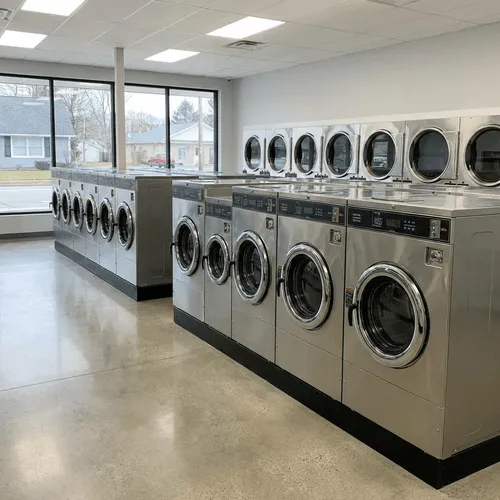
By triangulating dealer asking prices, auction realizations, and comparable used-machine sales under the sales comparison approach, checked against replacement cost new less depreciation. Heavy-duty commercial washers and dryers often stay serviceable long after accounting depreciation runs out, so the depreciation curve has to be justified rather than assumed.
Does replacement cost set the value of laundromat machines?
No, it is a starting point at most. Machine sets with strong utilization and modern controls can support values above a depreciated book figure, while obsolete or hard-to-move equipment trades well below replacement cost. Age, brand, capacity, and sale conditions drive the final number.
What information should I gather before a laundry equipment appraisal?
Purchase dates and prices, current book value, maintenance history, and machine-level facts: brand, model, age, capacity, and condition. Installation and removal costs, missing components, and downtime also change what a buyer would actually pay, so flag them up front.
How is laundry equipment valued for an estate?
At fair market value as of the date of death, or the alternate valuation date when elected, for reporting on IRS Form 706. Each asset ties to that specific date and market condition, so preserving inventory lists, serial numbers, and condition evidence early keeps the valuation defensible rather than reconstructed later.
Can a dry cleaning business multiple tell me what my equipment is worth?
No, because a business multiple prices the whole dry cleaning business, including goodwill, customer relationships, and location, not the machines alone. Rules of thumb such as 2.0 to 4.0 times seller's discretionary earnings or 30 to 50% of revenue therefore overstate what the equipment would bring in an asset sale, and they conflict with equipment-only auction results and lender collateral values.